Gardening with Love: Thoughtful Ideas for Late Winter and Early Spring Gardens
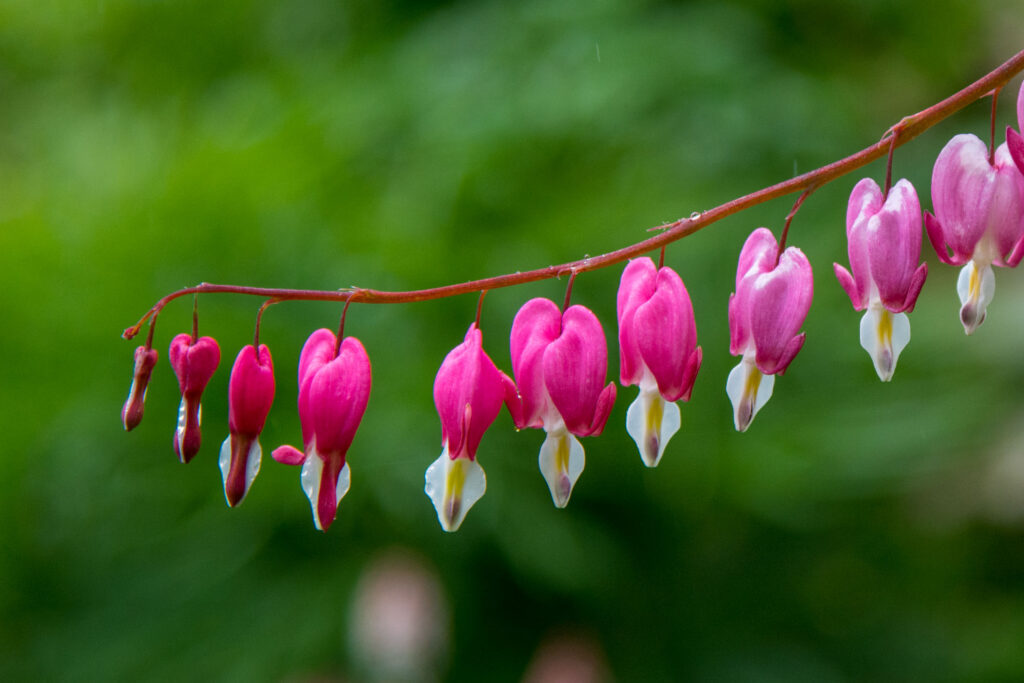
Bleeding heart (Lamprocapnos spectabilis) brings a gentle nod to “love” in early spring planting schemes.

February is often associated with Valentine’s Day, but love in the garden doesn’t have to be romantic, showy, or short-lived. In fact, some of the most meaningful expressions of love outdoors are practical, thoughtful, and quietly revealed over time.

As winter slowly begins to loosen its grip and the days lengthen, this is a natural moment to reflect on how gardens support connection - with nature, with wildlife, and with the people who spend time in them. Late winter and early spring are ideal seasons for looking at gardens not for what they look like right now, but for how they are designed to be lived in, nurtured, and enjoyed.

Love in the Garden Through Plant Choice

Some plants wear their sentiment lightly, often hinted at in their names rather than their appearance. Love-in-a-mist (Nigella damascena) is a perfect example: delicate flowers floating above soft, feathery foliage, bringing an almost dreamlike quality to borders in early summer. Likewise, bleeding heart (Lamprocapnos spectabilis - our main image) produces gentle, heart-shaped flowers in spring, adding charm and softness without overwhelming a planting scheme.

But love in planting design goes far beyond names. Choosing plants that suit your soil, aspect, and level of maintenance is one of the most caring decisions you can make - both for the garden and for yourself. Gardens thrive when plants are well matched to their conditions, reducing stress, minimising intervention, and allowing landscapes to settle naturally over time.

Late winter is an excellent time to review planting plans, identify gaps, and think about how different areas of the garden perform across the seasons. Are there moments of interest in early spring? Do some borders feel bare until summer? These observations often lead to small but impactful changes.

Designing Spaces That Invite Time Together

Love in the garden is often expressed through how spaces are used rather than how they look. Seating is a simple but powerful example. Thoughtful garden design can result in a considered position for a bench or chair that can turn an overlooked corner into a favourite spot - somewhere to pause, chat, read, or simply watch the garden change.

Rather than placing seating as an afterthought, good garden design considers views, light, shelter, and proximity to planting. A seat that catches low winter sunshine or offers protection from prevailing winds can extend the amount of time a garden is usable throughout the year.

Paths also play a role here. Gentle curves, changes in surface texture, and subtle pauses along a route encourage slower movement and awareness. A garden that invites wandering naturally encourages people to notice scent, sound, and seasonal detail - all part of feeling connected to a place.

Patience, Care, and the Long View

Gardening is, at its heart, an act of long-term care. Trees take years to mature, hedges soften gradually, and perennials often need time to establish before they truly shine. Designing with this in mind shows respect for the natural pace of growth and avoids the frustration that comes from trying to rush a garden into perfection.

Late winter is an ideal time to reflect on this longer view. Structural elements such as trees, hedges, and paths are particularly visible at this time of year, making it easier to assess the bones of the garden. If these elements are well considered, seasonal planting can change and evolve without losing cohesion.

Sharing the Garden with Wildlife

Love in the garden can also extend beyond human use. Planting for pollinators, leaving seed heads through winter, and allowing areas of long grass or informal planting to develop are all ways of supporting wildlife.

These choices don’t require large gardens or dramatic changes. Even small actions - such as selecting nectar-rich plants or reducing excessive tidying - can make a meaningful difference. Gardens that support biodiversity tend to feel more alive and resilient, offering year-round interest rather than brief seasonal peaks.

A Seasonal Moment for Reflection

This time of year i.e. February and early March, sits at an in-between point in the gardening calendar. There is still cold weather to contend with, but signs of renewal are beginning to appear. Snowdrops, hellebores, swelling buds, and longer afternoons all hint at what’s to come - it won't be long before those early spring plants are bursting forth with gusto!

This makes it an ideal time to reflect on what you love about your garden - and what you might like to nurture differently in the year ahead. Whether that’s creating more places to sit, improving planting structure, or simply allowing the garden to develop at its own pace, thoughtful choices made now can shape how a space feels for years to come.

Love in the garden doesn’t need grand gestures. It shows up in patience, observation, and care - and it’s often the quiet decisions that have the greatest impact.
How to Choose Sustainable Materials for your Garden: Style, Cost and Eco Impact

January is often a quieter month in the garden, but it’s a time when many homeowners start thinking ahead. The structure of the space is easier to see without foliage, and decisions around materials tend to feel more grounded when the garden isn’t competing for attention.

When we’re working with homeowners across the UK, sustainability often comes up early in these winter conversations. Not as a strict rulebook, but as a desire to make thoughtful choices; materials that will last, sit comfortably within the landscape and feel right over time.

What counts as “sustainable” can vary from garden to garden. Soil type, exposure, budget, existing hard landscaping and even how much maintenance you’d like to take on all shape what’s realistic. January can be a helpful moment to reflect on these factors before any spring work begins.

Start with What Your Garden Already Offers

In many UK gardens – including those we see around Warwickshire – there’s often something worth keeping. Reusing or creatively re-purposing existing materials is nearly always the most sustainable move.

We’ve found that:

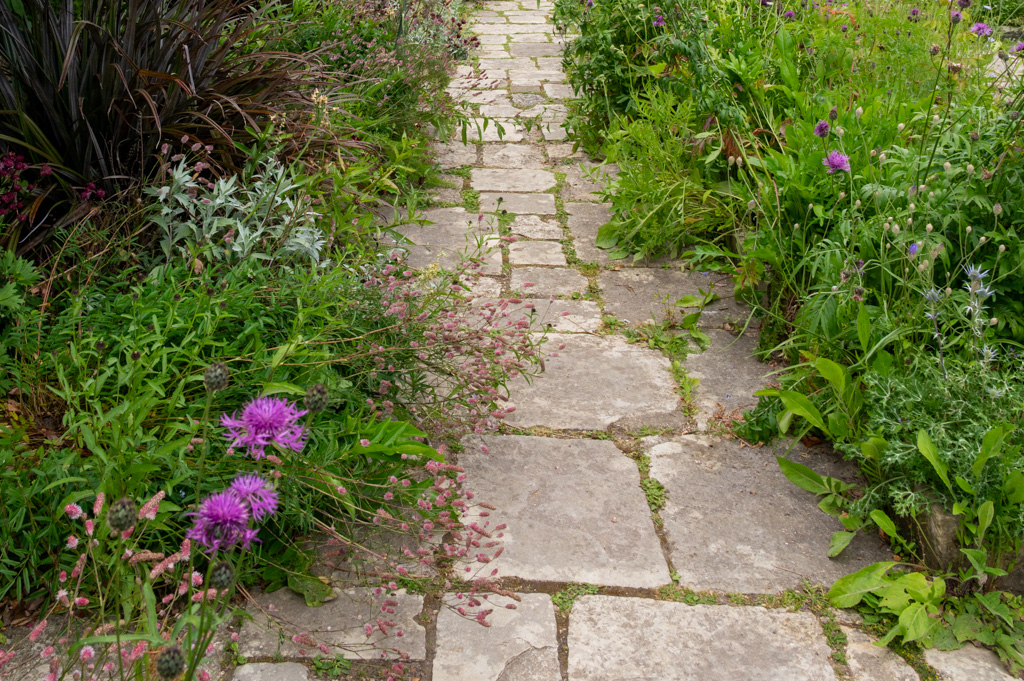
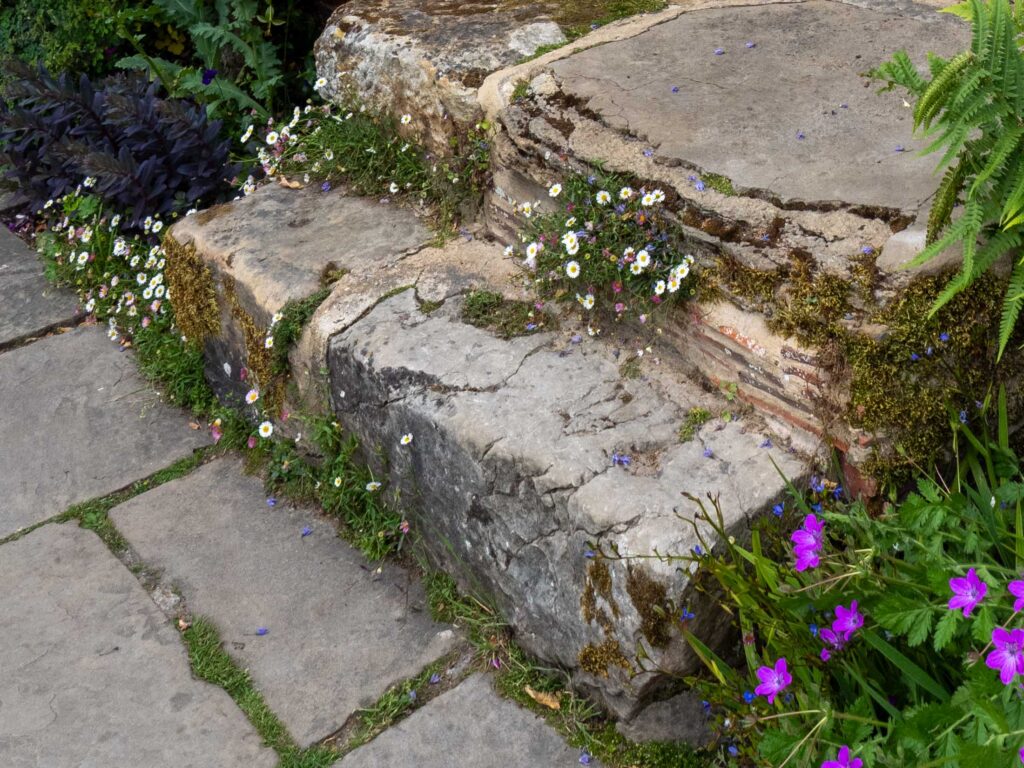
Considering what can stay reduces waste, saves money and helps the garden retain a sense of continuity. Sustainability can start before anything new is purchased. Reclaimed materials often carry a quiet advantage because they’ve already proven themselves. Stone steps like those in our main image, reused and allowed to weather naturally, tend to sit more comfortably in the landscape than newly introduced alternatives. In winter, when the garden’s structure is more visible, these details can help confirm which materials still feel right — and which are worth keeping as part of a more sustainable approach.

Reclaimed stone garden steps with self-seeded plants

Understanding the Eco Impact of Common Garden Materials

Different materials carry different footprints. Rather than ranking them, it can help to think about the type of impact involved: carbon cost, transport miles, extraction method and longevity, all play a part for instance.

Timber

Timber often feels like a natural choice, but not all timber is equal.

We tend to look at how much exposure the timber will receive and how our client feels about ongoing care. The most sustainable timber is the one that is more likely to perform best for many years in your specific conditions.

Stone

UK-sourced stone is often more sustainable than imported alternatives due to lower transport emissions. Sandstone and limestone from British quarries can sit very naturally in local gardens, especially those influenced by Warwickshire’s softer rural character. Costs can be higher than imported stone though, but longevity and a lower carbon footprint can often offset this over time.

Because cost is often a factor when choosing stone and paving when we do work with suppliers who import we choose those that care about the provenance of their products.

Gravel and Aggregates

Locally sourced aggregates can offer a flexible, cost-conscious option. They also help with drainage, which is increasingly valuable in changing UK weather patterns.

It can help to consider:

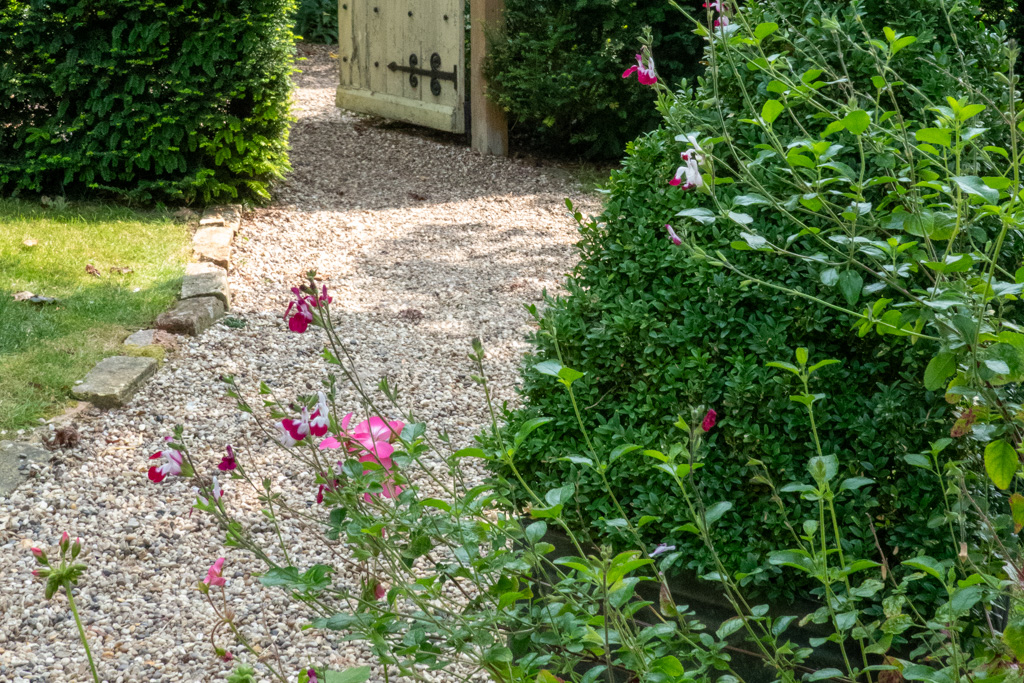
Gravel garden path with mixed planting and timber gate

Metal

Recycled steel and corten can work beautifully in modern and traditional spaces. Many homeowners tell us they appreciate how corten’s weathering process brings character that actually improves with age.

Matching Sustainability with Garden Style

Sustainability doesn’t have to dictate a particular look. We often find that understanding your preferred aesthetic makes the material choices easier.

Contemporary Gardens

Simple lines and calm surfaces work well with:

The key is consistency. Sustainable materials tend to shine when they’re used thoughtfully rather than sparingly.

Cottage and Traditional Gardens

We see many homeowners drawn to reclaimed brick, gravel paths and British stone in this style. Each tends to blend comfortably into older properties around Kenilworth and Coventry’s outskirts.

Reclaimed materials offer both sustainability and an instant sense of belonging.

Wildlife-Friendly and Low-Intervention Gardens

Natural materials such as untreated softwood, bark mulch paths or local aggregate surfaces feel at home in these spaces. They invite movement, allow for ecological change and age gently.

Considering Cost Without Losing Sight of Value

Cost plays a part in every project, but sustainability and affordability can sit together more comfortably than many expect.

A few guiding thoughts we often discuss with clients:

Balancing cost and sustainability usually becomes clearer once you’ve narrowed down style and functional requirements.

How Materials Weather Over Time

Sustainability also relates to how a material behaves once it’s exposed to the UK’s mix of rain, frost, sun and wind: this is something many people notice most clearly in winter, when surfaces are fully exposed to the elements and there’s less planting to soften them. Natural stone paths, for example, often reveal their true character at this time of year — uneven edges, gentle colour variation, and joints where planting has gradually found its way in. In our experience, these moments tend to reassure clients that a material has been well chosen; it feels settled rather than imposed, and improves with age rather than demanding constant correction.

Next time you're in your winter garden notice how:

It can help to imagine what your garden will look like in five or ten years rather than at installation.

Natural stone garden path with planting weaving between slabs

Practical Questions That Often Clarify the Decision

Here are a few reflective prompts that many people find helpful:

Sustainability becomes simpler when the material supports the way you already live in the garden. For more thoughts on choosing surfaces in the garden check out our previous post.

Final Thoughts

Choosing sustainable materials isn’t about perfection; it’s about making choices that feel grounded, durable and sympathetic to your garden’s character. We’ve found that once clients align style, practicality and their environmental values, the finished space tends to sit more comfortably with them for years to come.

If you’re planning changes, we can explore what feels right for your space.

How to Create Flow and Cohesion in Your Garden Design

A garden with natural flow and cohesive planting design

Have you ever walked into a garden that just feels right - where everything seems to belong, and your eyes and feet are naturally drawn through the space? That sense of ease and connection doesn’t happen by accident. It’s the result of good garden design - specifically, flow and cohesion.

Whether your garden is small and urban or large and rural, creating a sense of harmony between its elements is what transforms it from a collection of parts into a beautiful, usable whole.

In this post, we thought we'd explore what flow and cohesion mean in garden design, why they matter, and how you can start improving both in your own garden.

What Do Flow and Cohesion Mean in Garden Design?

Flow is about movement and connection - how your eye, body, and attention move through the space. So paths, planting, sightlines, and focal points all influence how a garden flows. A garden with good flow tends to feel intuitive: you want to wander, explore, and linger in the space.

Cohesion, on the other hand, is about unity. It’s the visual glue that ties everything together, so think materials and colours; shapes and planting style. A cohesive garden feels balanced and intentional, even if it’s full of variety.

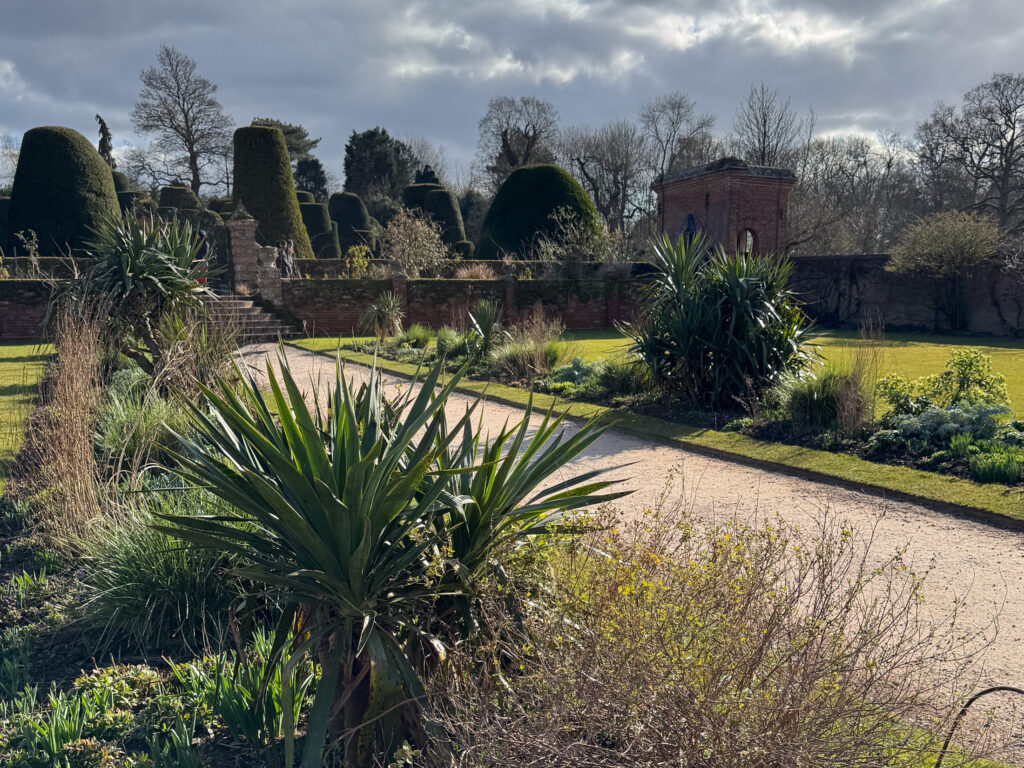
Together, flow and cohesion make a garden feel comfortable, natural, and right. Even in an 'off season' our main photo of the garden at Packwood House, National Trust illustrates this; our eyes 'travel' through the image easily - the pathway draws the eye towards the steps and then along the yew topiary towards the building and then down again to the pathway, whilst the structural planting maintains the garden's cohesion through repetition of colour, form and texture.

Why Flow and Cohesion Matter

Without flow, a garden can feel disjointed or confusing - you don’t quite know where to go or what to look at.
Without cohesion, it can feel cluttered or chaotic - lots of nice bits, but nothing that holds them together.

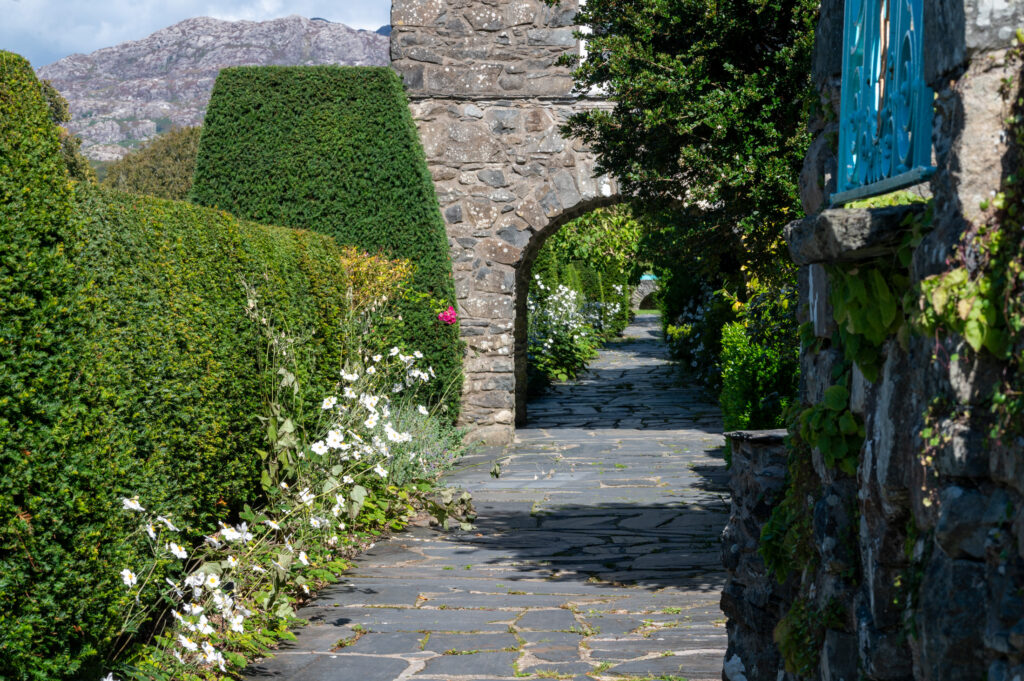
When you get both right, the whole garden starts to “speak the same language.” Every element - from paving to planting - supports the overall story or feel of the space. We loved this example at Plas Brondanw Gardens part of the Clough Williams-Ellis Foundation - see how the building and pathway materials pick up the Snowdonia mountains beyond? And how the repeated white anemones and topiary 'carry' the eye along the pathway?

Repeating materials and plant colours to create cohesion in a garden.

How to Improve Flow and Cohesion in Your Garden

If your garden doesn’t quite “hang together,” here are some easy ways to improve it:

1. Repeat key elements

Use the same materials, colours, or plant species in more than one area to visually link spaces together. Repetition helps create a rhythm that your eye recognises.

2. Create clear sightlines

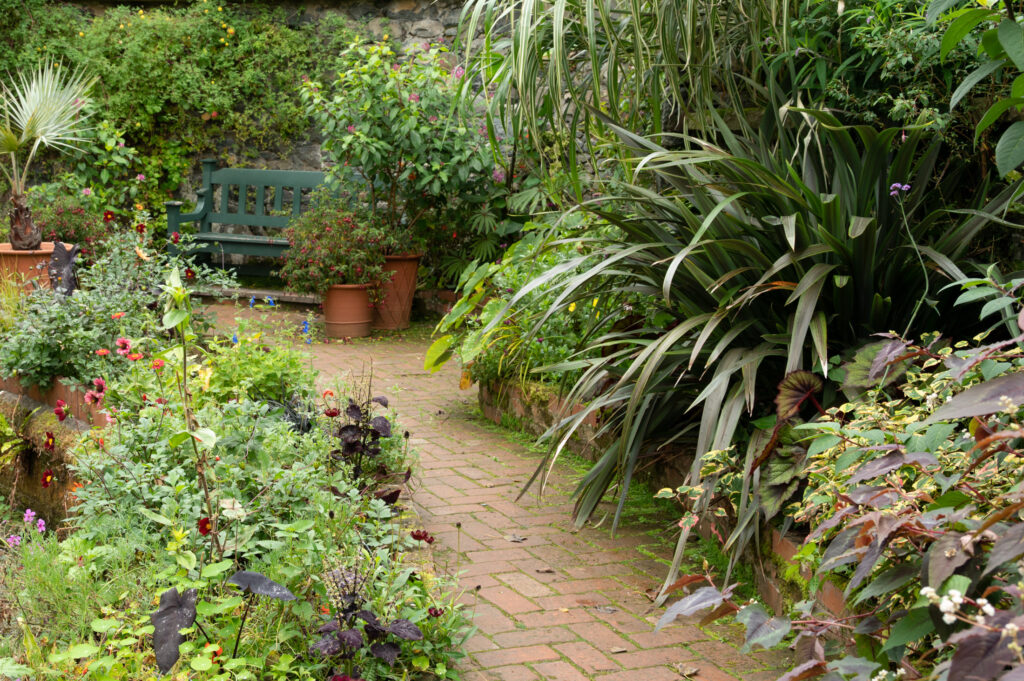
Lead the eye towards something - a tree, sculpture, pot, or bench - to encourage natural movement through the space. In our example here of Bodnant Garden, see how your eye naturally follows the pathway towards the bench?
(Pro tip: Stand at your back door and look out — what’s your eye drawn to first?).

Garden path leading to a seating area creating visual flow.

3. Mind the transitions

Pay attention to how one area meets the next. Subtle changes in texture, height, or colour can help spaces flow into one another.
Avoid abrupt shifts - instead, use planting or materials to blend the edges. Check out our previous blog on Creating an Indoor Outdoor Cohesive Space too!

4. Keep your palette consistent

Limit the number of hard landscaping materials and dominant colours you use. Consistency creates calm and makes a space feel more unified.

5. Balance open and enclosed spaces

Flow relies on contrast - open lawns that lead into planted corners or sheltered seating areas create movement and interest without chaos.

The Takeaway

Flow and cohesion aren’t about strict rules - they’re about creating a feeling.
When your garden has both, it becomes a place you want to spend time in, because everything works together.

Next time you’re looking around your garden and something feels “off,” take a step back and ask yourself:

If the answer’s no, some thoughtful changes can help make a big difference!

🌼 Free Guide: 6 Simple Tricks to Improve Flow and Cohesion in Your Garden

Want practical, designer-approved ways to make your garden feel more connected?

👉 Download our free guide: “6 Simple Tricks to Improve Flow and Cohesion in Your Garden”
You’ll get three simple tips for improving flow and three for creating cohesion - easy to use, no matter what size or style your garden is.

Autumn Planting Guide for Warwickshire Gardens: Bulbs, Plants & Design Tips


Welcome to our autumn planting guide for Warwickshire gardens. One of the things we’re always trying to instil in our clients is that Autumn isn’t the end of the gardening year – it’s actually the start of the next one, and while the leaves may be falling and the evenings drawing in, September and October are usually some of the very best months to get plants in the ground.

Here in Warwickshire, our autumn gardens are blessed with warm(ish) soils, fairly reliable rainfall, and just enough growing season left for roots to settle in before winter. And that means that anything you plant now is more than likely to wake up strong and raring to go next spring.

In this guide, we’ll cover:

And at the end, don’t miss your free Autumn Planting Tips — a practical, step-by-step guide to help keep you on track this season.

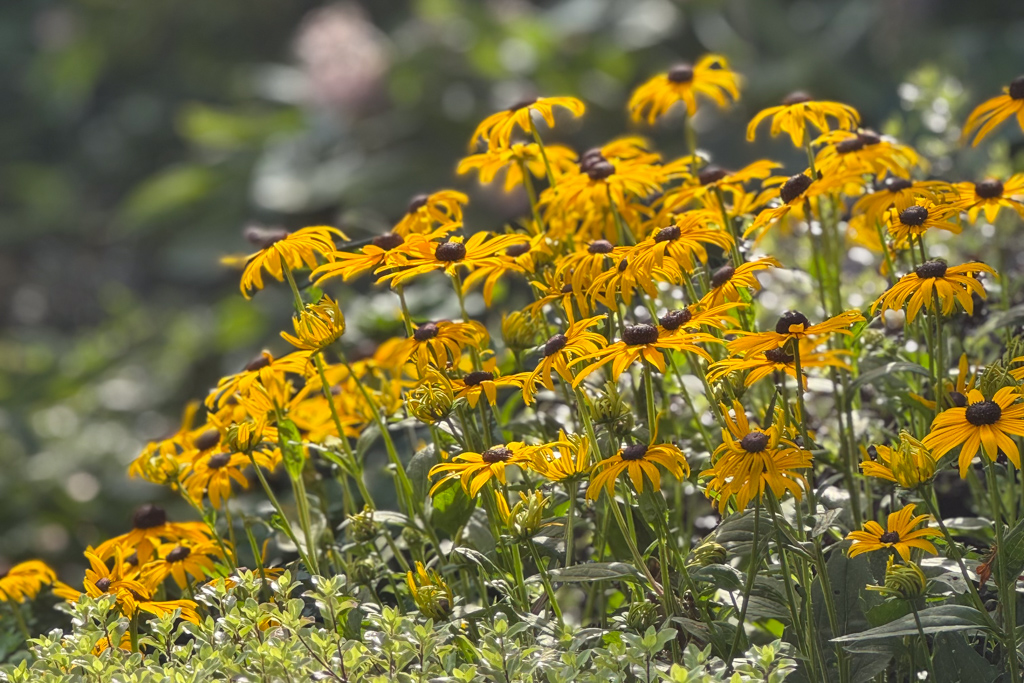
Rudbeckia bringing colour and drama to autumn planting in Warwickshire garden

Why Autumn is the Perfect Time to Plant

Many of our clients are used to thinking of spring as “gardening season” and it can feel odd to start planting when the days are getting shorter. But here’s the secret professional garden designers and horticulturalists know: autumn is actually better than spring for planting most things.

Here’s why:

In short: plant now, and by spring you’ll have stronger, healthier plants with less work. Win-win!

Best Plants to Plant in Autumn

So what should you be putting in the ground right now? Thinking about plant types, and in no particular order here are some ideas for you.

Spring Bulbs for Colour

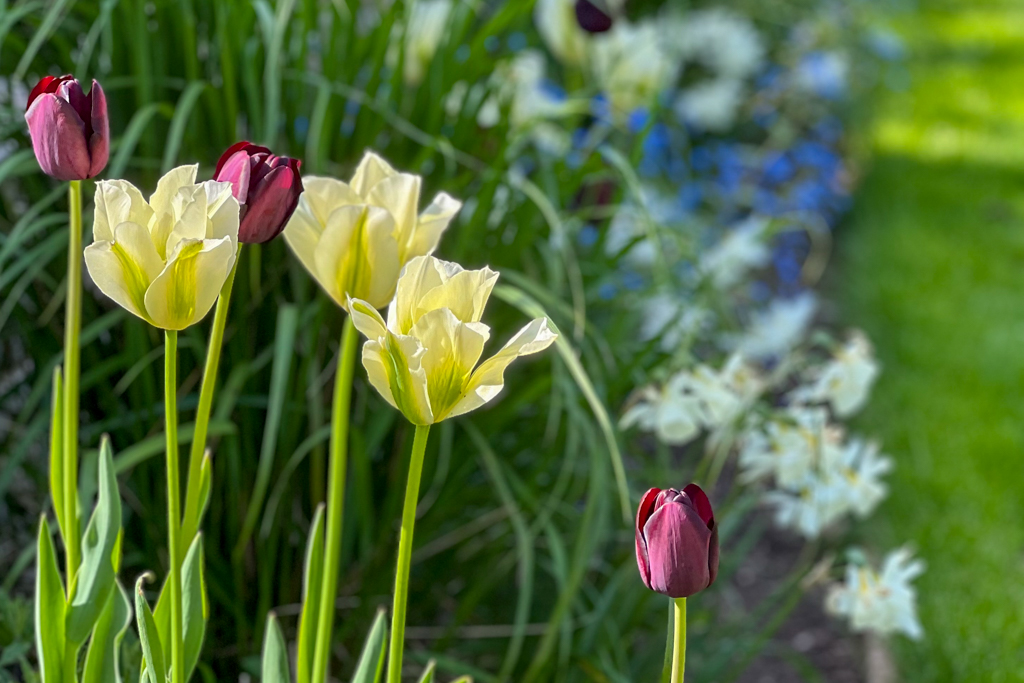
Spring bulbs planted in autumn for colourful Warwickshire garden border.
Tulips planted in autumn bring vibrant colour to Warwickshire gardens in spring.

Autumn is the time to plant bulbs if you want a dazzling display next spring, consider:

Design Tip: Plant bulbs in groups of 3, 5, 7, or more. Odd numbers and clusters look much more natural than straight lines.

Perennials & Grasses

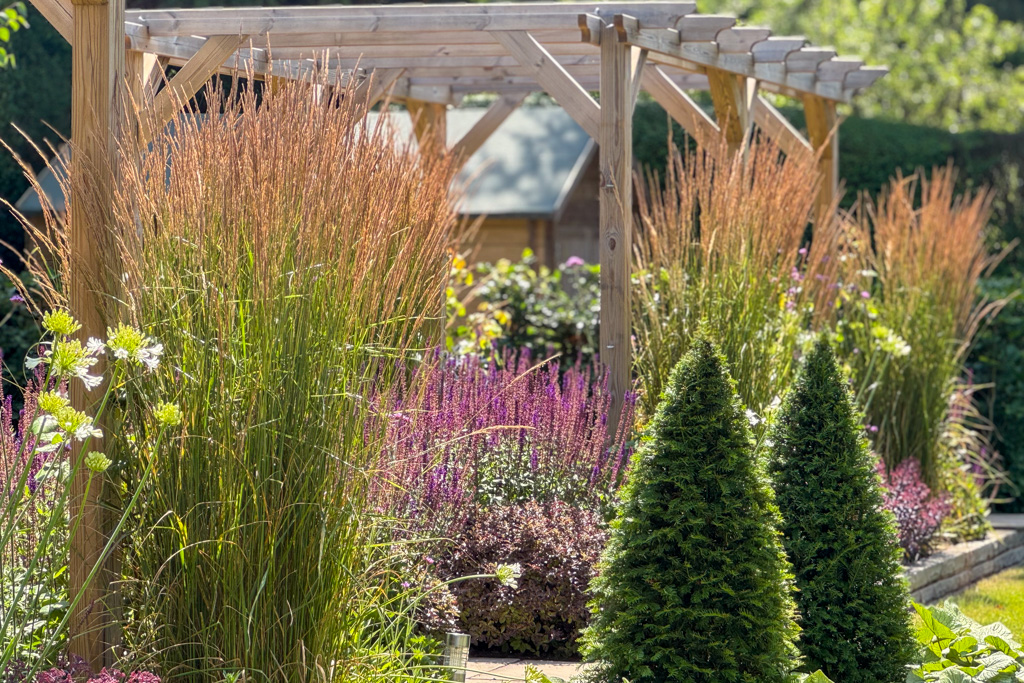
Ornamental grasses adding autumn height and structure to a Coventry garden design

Perennials planted now focus on growing strong root systems over the winter, so they’re usually tougher and fuller next year, think about:

Design Tip: Mix grasses with late perennials as we've done here for a Coventry client, for a soft, naturalistic look that lasts well into winter.

Trees & Shrubs

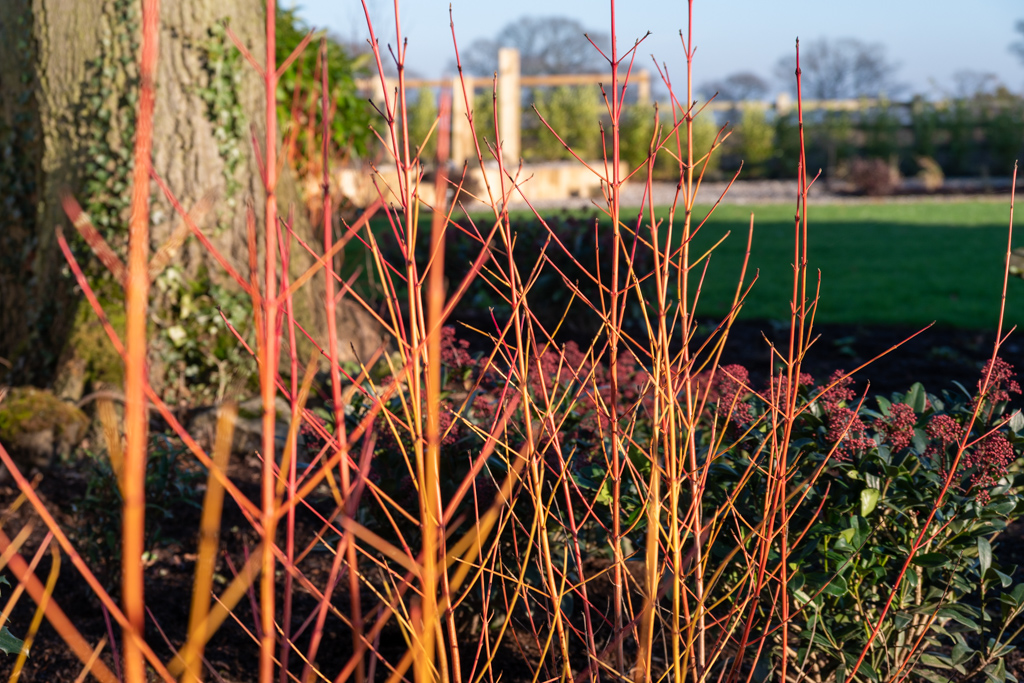
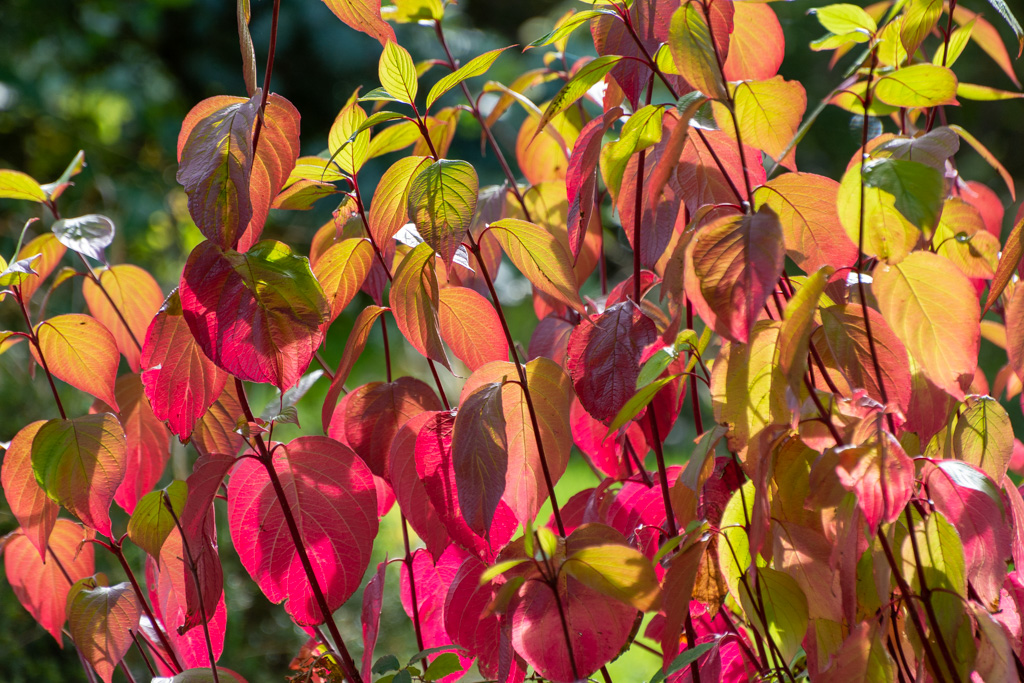
Cornus shrubs (Dogwood) adding winter colour to a Warwickshire garden design.

Autumn is hands-down the best time to plant trees and shrubs. Some of our favourites include:

Design Tip: Position trees and shrubs carefully — they’ll be the backbone of your design for years to come.

Plants for Wildlife

Butterfly enjoying Sedum in a Warwickshire autumn planting scheme.

It’s easy to forget that wildlife needs us most in autumn and winter too. Planting now helps your garden stay alive with activity.

Design Tip: Mix wildlife-friendly plants into your borders so they look great and support nature too.

Preparing Your Garden for Autumn Planting

A little prep tends to go a long way. Here’s how we suggest getting your beds and borders ready:

  1. Clear away summer annuals – this makes space for new plants and the old growth is a useful addition to composters.
  2. Improve the soil – dig in home-made compost or other suitable soil improvers, especially in Warwickshire’s clay-heavy areas.
  3. Mulch – laying a 5cm layer locks in moisture, feeds the soil, and insulates roots.
  4. Think layers when planting – shrubs for structure, perennials for colour, bulbs for seasonal pops.

Design Tip: Autumn is the time to set the stage. Treat each border like a theatre — the big players at the back, supporting acts in the middle, and the stars of the show at the front.

Garden Design Insight: Thinking Ahead to Spring & Summer

Cornus shrubs (Dogwood) bringing autumn leaf colour to a Warwickshire garden border.

This is where design really comes into play. Autumn planting isn’t just about filling gaps — it’s about planning the story your garden will tell next year.

When we design planting schemes at Blue Daisy, we look for:

It’s easy to get carried away at the garden centre, but a professional plan means you’ll spend wisely, plant smartly, and enjoy your garden more.

Free Resource: Autumn Planting Tips

To help you put this into action, we’ve created a free downloadable Autumn Planting Tips sheet. It covers:

Download your free Autumn Planting Tips here.

Ready to Refresh Your Garden This Autumn?

Autumn planting is the gardener’s secret weapon. By popping bulbs, perennials, and shrubs in the ground now, you’re setting yourself up for a spring and summer that will be bursting with colour, structure, and life.

If you’d like a helping hand:

Together, we’ll make sure your garden not only survives the winter but thrives next year and beyond.

Final Thoughts

The nights may well be drawing in, and the garden might feel like it’s slowing down, but in reality, autumn is where the magic begins. With the right plants, a bit of prep, and a touch of design, you can create a Warwickshire garden that feels alive through every season.

Let’s roll up our sleeves, plant some bulbs, and look forward to a spectacular spring!

How to Make a Small Garden Look Bigger: Expert Design Tips

Small Garden Design: Big Impact

It’s a common dilemma for homeowners: gardens are getting smaller, especially in new builds, and clients often ask how to make their small garden look and feel bigger. The good news is that limited space doesn’t mean limited potential. With thoughtful design techniques, a small garden can feel spacious, layered, and full of personality.

Here are six clever ways garden designers create the illusion of space.

1. Use Perspective to Make a Small Garden Look Larger

Small garden utilising perspective with diagonal and angled pathways and paving to help make the space feel longer.

One of the most effective tricks in small garden design is using perspective. Just as artists use vanishing points to create depth, garden designers guide the eye through space with narrowing paths, staggered planting, and changes in scale.

2. Divide Small Gardens into Zones

Small garden divided into zones with dining area, planting beds, utility space and relaxing sun spot for a spacious feel.

It may seem counterintuitive, but breaking up a compact garden into smaller “rooms” can make it feel bigger. Instead of revealing the entire space at once, divide the garden into zones such as a dining nook, seating area, or planting bed. We created 4 distinct zones in our client's garden shown here - an entertaining space, planting, relaxing and utility zone all encompassed in one, compact garden space.

Pergolas, trellises, or even a change in paving material can define these areas while keeping a cohesive feel. Screening part of the space with plants or hard materials adds curiosity and encourages exploration, helping the garden unfold gradually.

3. Go Vertical with Planting and Features

Vertical planting adding height and interest in a compact garden.

When ground space is limited, look upwards. Vertical design elements such as wall-mounted planters, trellises, green walls, or espaliered trees add layers of interest and draw the eye skyward.

Climbing plants like clematis, jasmine, or climbing roses soften hard boundaries and add seasonal colour and fragrance without taking up precious ground space, illustrated beautifully in this little corner of Sissinghurst.

4. Use Lighting and Mirrors to Expand Small Spaces

Small garden lighting with uplight creating depth and evening atmosphere

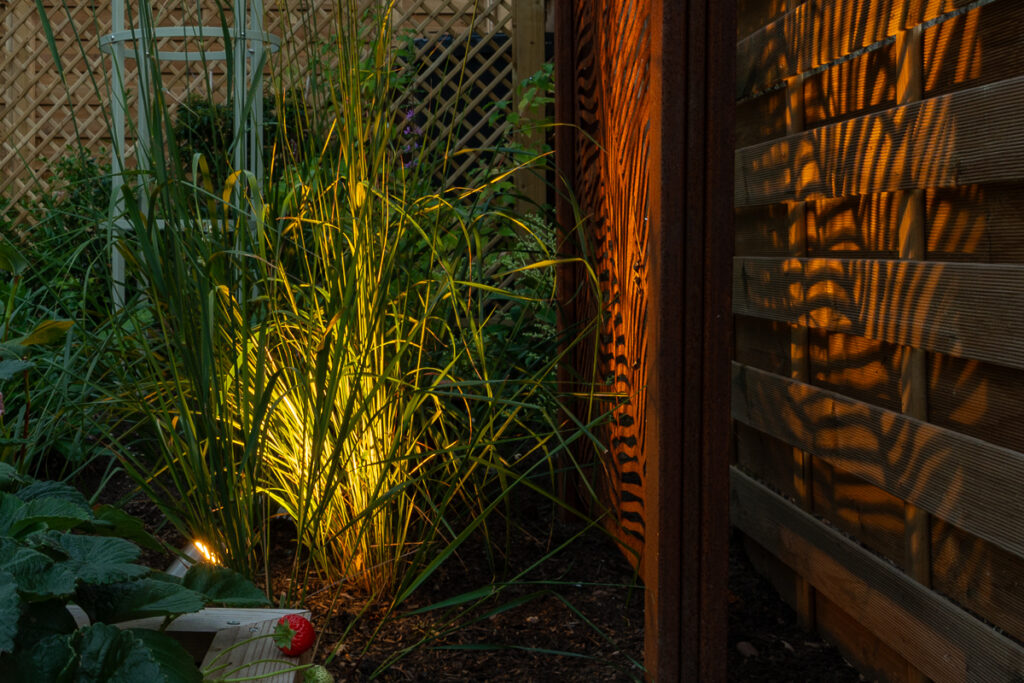
Lighting is a powerful way to enhance the sense of space. Uplighting a tree, backlighting planting, or adding subtle under-bench lighting creates depth and atmosphere, particularly in the evening. We chose to uplight a patterned screen in our Solihull clients' garden, shown here, to throw interesting shadows onto the boundary at night.

Mirrors are another clever tool. Positioned carefully, an outdoor mirror can reflect planting, light, or sky, making the garden feel twice as big. To keep it natural and safe for wildlife, angle mirrors slightly or partially conceal them with plants.

5. Choose a Cohesive Colour and Planting Palette

Small garden with cohesive colour palette of paving and planting for a spacious feel

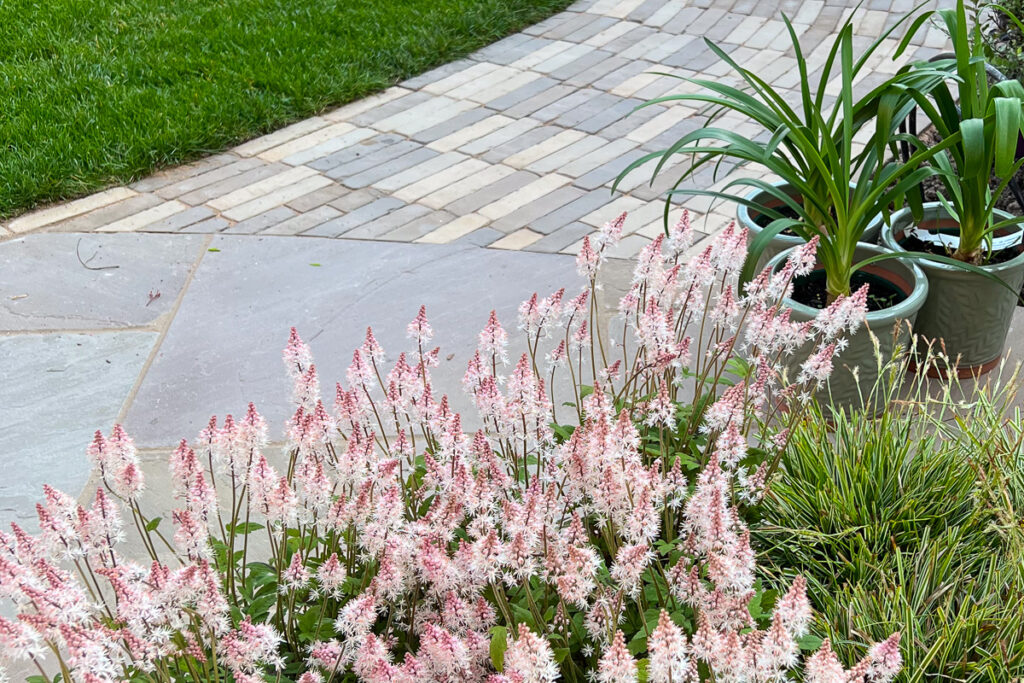
In smaller gardens, too many materials or colours can make a space feel cluttered. Instead, stick to a harmonious palette of two or three hard landscaping materials and a restrained plant selection as we did here for a Tamworth client.

Repetition of shapes, colours, or textures creates rhythm and flow, helping the garden feel calmer and more spacious.

6. Add a Focal Point to Draw the Eye

Focal point water feature invites exploration and movement through a small garden.

Every small garden benefits from a focal point. This could be a sculpture, water feature, specimen plant, or even a beautifully designed bench. A well-placed focal point anchors the design and gives the eye somewhere to rest.

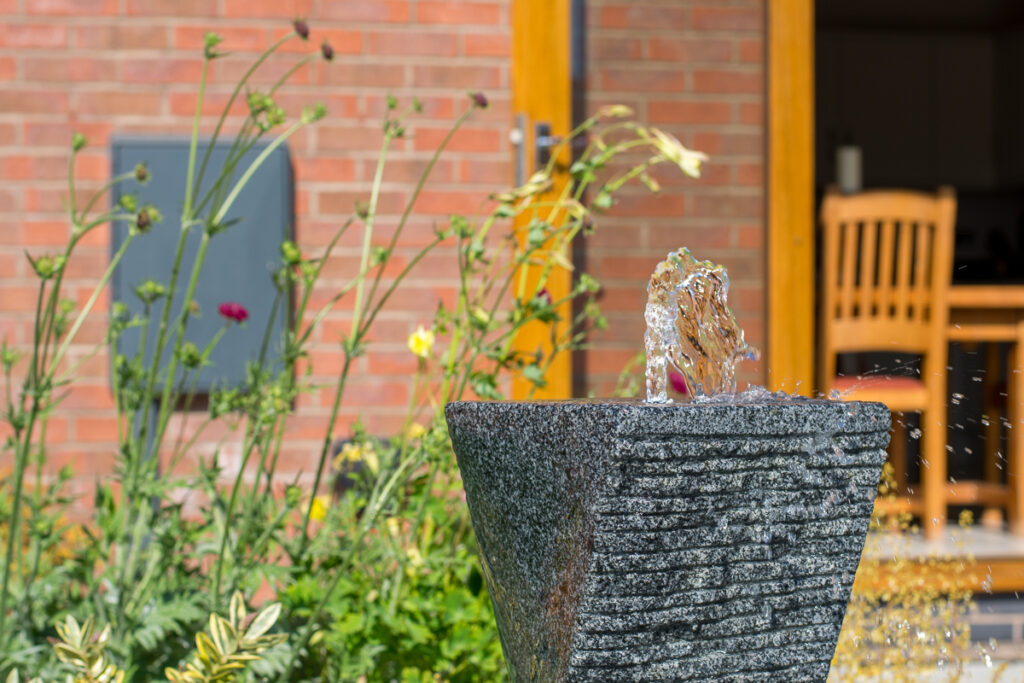
Positioning a focal feature at the far end of the garden, or just out of immediate sight, encourages movement through the space and makes the garden feel deeper than it really is. We offset this beautiful water feature away from the patio doors in our Meridan client's wide but shallow garden. Our clients could hear the water but couldn't see it directly from many parts of their indoor space, drawing them outside to explore.

Conclusion: Small Garden Design That Feels Spacious

Designing a small garden is about creating illusions, managing perspective, and guiding the viewer’s journey. Through smart zoning, vertical planting, cohesive materials, and clever use of light and focal points, even the smallest garden can feel generous and inviting.

Thinking about redesigning your own small garden? Get in touch to find out how we can transform your outdoor space into a beautiful, functional retreat.

Plants for late summer scent


For the most part our plants use scent to attract pollinators and other beneficial insects. Flowers that release scent during the day, for instance, are often pollinated by bees and butterflies, whereas those that release scent in the evening are seeking to attract bats and moths.

Humans too though, derive benefits from scent-wielding blooms. Lavender, jasmine and passionflower for instance, can all help relieve stress and induce inner calm. Scent can bring a sense of emotional wellbeing and mood enhancement too, often invoking positive memories for people – it was an important characteristic we utilised when we designed a dementia garden for a care home. By stimulating our sense of smell, scent brings another dimension to the enjoyment of a garden. In short, we connect with nature even more when we experience a more sensory environment, so including plants for scent in a scheme as well as for aesthetics makes sense.

With thousands of plants and varieties to choose from it’s possible to have scented flowers in your garden for 12 months of the year – and that’s not even including scented foliage! – but as a brief introduction here are some of our favourite scented plants for the next few months, to consider for your own garden:

For July

Philadelphus ‘Manteau d’Hermine’ – commonly known as mock orange, these shrubs are renowned for their orange-scented blossom. This is a compact variety, perfect for smaller gardens and easy to prune. P. ‘Belle Etoile’ is another more compact variety (slightly taller though not as wide as P. ‘Manteau d’Hermine’) but as long as you have a sunny spot there is usually a Philadelphus available to fill it!

Rosa Gertrude Jekyll – this is a beautiful, quintessential cottage garden staple with an old rose scent and striking pink rosette flowers.

For August

Jasminum officinale – a well-known and vigorous climber; this one can cover a wall quickly, but there are more compact varieties available, such as j. officinale Devon Cream; but all produce clusters of white flowers that emit a truly heady fragrance throughout the summer months.

Matthiola longipetala (Night Scented Stock) – a small but ‘sprawly’ old-fashioned lilac-to-white coloured annual that looks best sown in groups or in containers. It releases a strong scent at night time and is perfect for our night pollinators.

For September

Calycanthus ‘Venus’ – a deciduous shrub that repeat flowers from May through to September. It produces large, fragrant flowers that aren’t dissimilar to magnolia blooms.

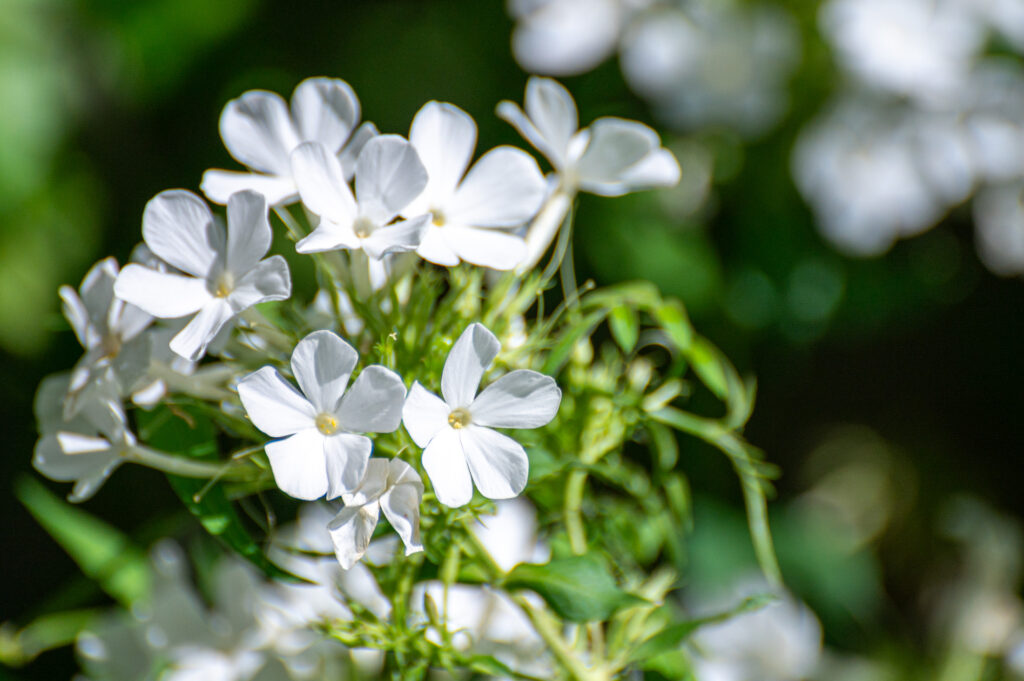
Phlox paniculata ‘Rembrandt’ – great for areas of light shade, this 90cm tall perennial produces clusters of scented white flowers that seem to glow in the dark of dusk – and attract our evening pollinators at the same time – win-win!

This list is by no means exhaustive – or definitive – and many of these plants will flower across more months than the single one we’ve chosen them for here, but as a starting point to consider more fragrant flowers for your garden, you could certainly do worse!

The Problem with Narrow Borders

The term ‘less is more’ is used a lot, we say it ourselves for many reasons, however, when it comes to borders, more is most definitely more!

Narrow Border Constraints

We are often asked to develop a planting scheme or suggest plants for people that haven’t had their garden designed but have had their garden changed and built by landscapers who’ve ‘left the garden borders ready for planting’. Unfortunately, what we sometimes find are very narrow borders, often just placed around the perimeter of a garden.

Whilst this is by no means a criticism of landscapers, or clients, very narrow borders do make it difficult to create an impactful planting scheme. Sometimes narrow borders are simply due to either landscapers or home owners not realising or understanding the potential for borders to be used to as part of our garden design toolkit to change the whole look and feel of a garden; to bring ambience, for instance, or create surprise, to draw the eye or direct it, to create balance and proportion to the space. They don't appreciate that it is usually far better to have one or two large garden borders than lots of really tiny ones. Then again, it could be that homeowners want a low maintenance scheme and think that a narrow border means lower maintenance, when actually, a very narrow border can make it difficult to achieve lower maintenance status.

No Room for Growth

To illustrate this final point let’s consider an evergreen shrub such as a Choisya – a great, low maintenance shrub that flowers in spring – once you plant it, there is very little to do to it. Whilst there are a number of Choisya varieties available, for this example our shrub will naturally grow to around 1m width once the plant is established. Now imagine a 30-40cm deep border - which isn't unheard of - which means that if we did use it, our poor Choisya would have roughly a third pushed up against a fence and another third hanging over the border edge often getting in the way of a lawn mower resulting in the plant never really looking that attractive and homeowners never being that happy with it. As such, so many garden staples that are lower maintenance just can't be used in narrow borders and if they are, would outgrow the available space in no time at all. Had the borders been wider a lower maintenance scheme can be more effectively achieved.

Sentries in a Row

Picking up on some of our earlier design points too, narrow borders make it impossible to, quite literally, create any sense of depth in a border which, if available, brings with it opportunities to utilise other design principles such as using various textures, sizes and shapes of plants to create drama and visual impact. Instead, in a very narrow border a row of similar shaped plants - or indeed the same plant - might need to be used in the space in order to make the best of the available space and create some sort of cohesion, but the down side of that strategy is that it can often end up looking a bit like peas in a pod or sentries in a row. Even a very contemporary garden – which often uses a more limited planting palette – would still benefit from deeper borders.

Expand the Border

When faced with narrow borders we do usually try to convince a homeowner to 'expand' at least one border if it is at all possible to allow for a richer tapestry of shapes, form and colour in the garden, as well as to bring more balance to the overall feel of the space. And when we design a garden, we will always design it with a more balanced proportion of planted to non-planted areas, utilising deeper borders and the positioning of them to allow us to create a planting scheme that delights the client and wildlife/pollinators too.

So, if you are designing the layout of your own garden do try to consider the size and positions of your borders a little more because where they are concerned, more is most definitely more!

Colour in the Garden - The Benefits of Blue

When it comes to using colour in the garden, did you know that blue is a fantastic colour to use because it's so versatile? It has a recessive quality to it which some people may find ambiguous but it is that exact quality that makes it such a useful colour to use in a garden design. Simply by receding, it can be used to blend other colours together in planting; or to create an illusion of depth be that in planting or within the landscaping materials; it also has an ability to pick up the mood of its neighbouring plants too.

Blue can add depth and space to a garden so it’s a great colour to use at the back of a border to make it seem like the vista is extending even further. There are so many different hues and tones of colours - pale blue for example, can bring lightness, through to intense saturated hues – think of the vibrancy of cornflowers on a hot summer's day! Blue also works really well in shady areas as it picks up the light and is a colour well known for creating calm, restful and contemplative spaces. So, with that in mind blue can offer you opportunities to help obtain the right feel and ambience that you are trying to create.

Some well known blue plants you might think of immediately are Ceanothus, Muscari, Iris and Geraniums but here are a few others that we use in our planting schemes:

Echinops ritro ‘Veitch’s Blue’ is popular for its globes of blue flowers which contrast so well with other plant forms, they stand around 1m in height and 45cm in width so are ideally suited to the middle or back of a sunny border. Echinops are magnets for lots of pollinating insects to your garden too which can only be an added bonus!

Salvia x sylvestris ‘Mainacht’ has indigo blue flowers on spikes that liven up a border in early to mid summer; it stands around 80cm in height and 50cm in width. It looks great in an herbaceous border and is a reliable perennial which will keep coming back year after year making it a good investment. It prefers well drained but moist soil, plant this and you’ll notice pollinating insects visiting your garden!

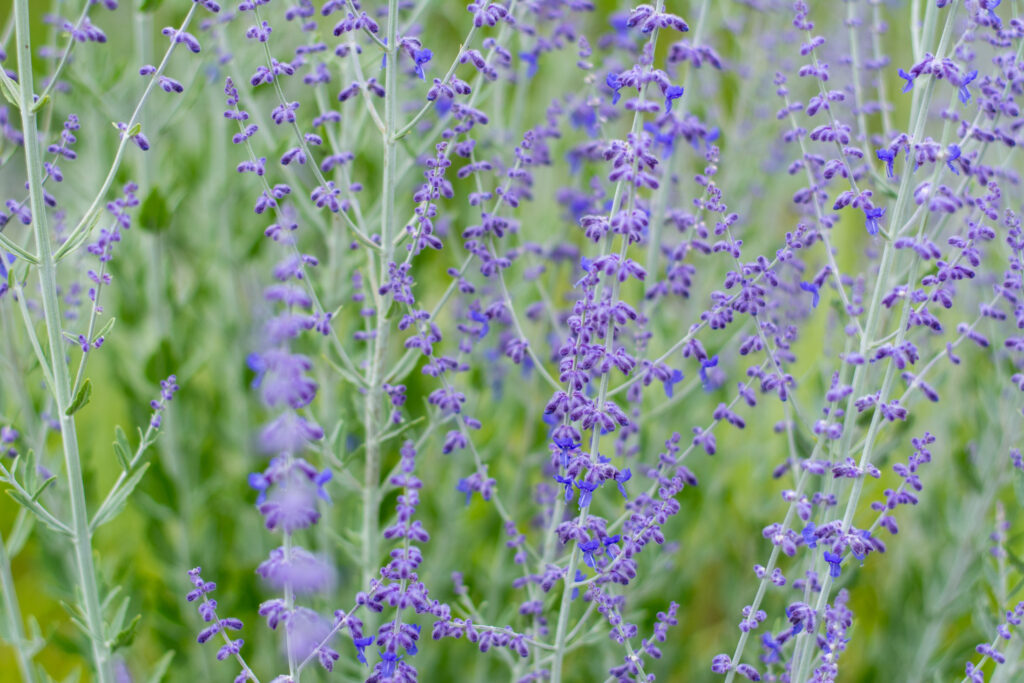
Salvia 'Blue Spire' (previously classified as Perovskia ‘Blue Spire’) is also known as Russian sage, (see main pic) it has aromatic leaves and upright silvery grey spires with blue tubular shaped flowers. Often mistaken as a perennial it is in fact a shrub and will typically flower in August and September. It can get to around 1.2m in height and 1m width and is happiest in full sun. Plant it near a pathway where you can enjoy its fragrance.

Don’t forget you don’t have to just have blue flowers in the garden to create that blue theme; you can match your gates, doors or even paint obelisks in this colour too which will create dynamism, cohesion and flow right through your garden.

We’ve created a Pinterest board for ‘Blue’ in the garden, take a peek here www.pinterest.com/bluedaisyuk/colour-wheel-blue/

Building to Protect Gardens

Considering having some building work done on your home? If so, now is the perfect time to factor your garden into those considerations too. As Garden Designers who often follow on after builders have left a property, we can find some pretty shocking things. Not all of the time thankfully, but enough to know it’s an industry wide problem for many homeowners so it’s good to get ahead of the game if you can, and some – if not all – of the points below are a good idea to discuss with your builder preferably at quoting stage or at the very least, a pre-build meeting.

Think about your garden/s (both front and back if you have them) and try to be clear about what – if anything - you want to protect. Identify those things right at the outset, before any building work begins – before you’ve even got quotes for building – for instance, garden plants and trees, family space and/or access, elements like patios or water features, etc.

If builders know at the outset (i.e. at the point of being asked to quote) what it is you’re expecting of them you can both agree how things might happen throughout the build, for instance:


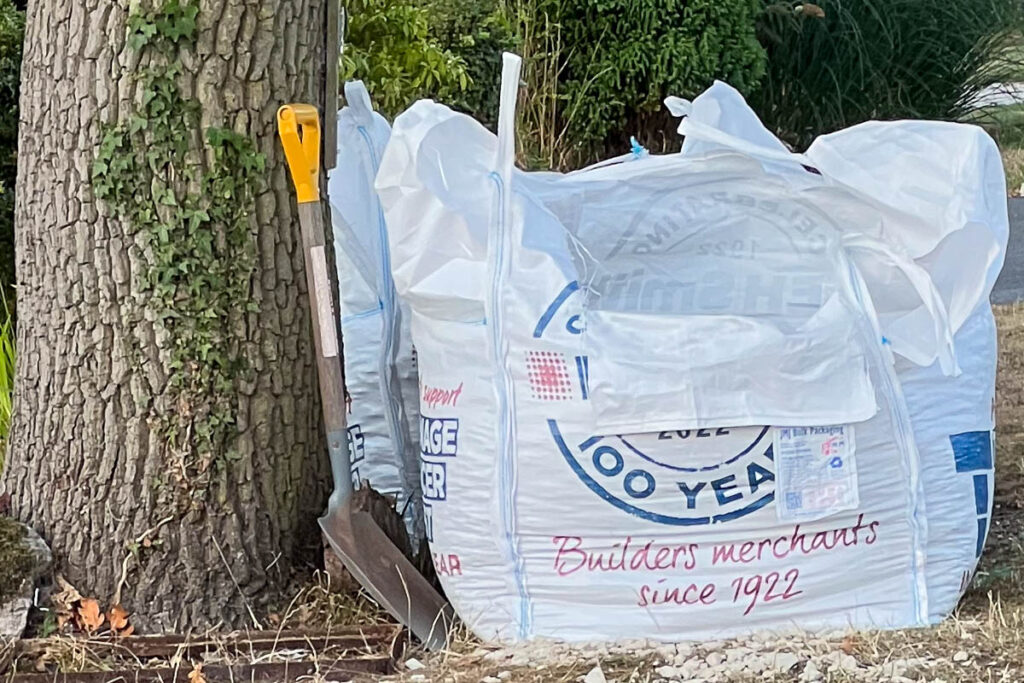
Protect gardens from compaction: Often known affectionately as 'tonney bags' bulk bags are heavy! (the clue is in the nickname!), so storing them under trees, right on top of a tree's roots is not a good practice. Tree roots need to breathe so compaction will be detrimental to a tree's health.


Some builders will have their own set of ‘green’ credentials but it’s important to ask to see them and ask everyone who's quoting how they will look after your land whilst transforming your home. Whilst homeowners need to be realistic about impending deliveries and storage requirements for hard landscaping materials, builders need to also know that all of a homeowner’s property is not a free access-for-all and sundries, so compromises will need to be made on both sides. But what you don’t want is to have to spend even more money needlessly dealing with contaminated or compacted soil or waste in your garden or a long list of damaged or dead and dying plants once builders have left (which has, unfortunately been the case, for some of our clients). So agreeing a plan of attack at the outset – and getting it written into contracts – is in both parties’ best interests.

Existing home owners at least have the opportunity to potentially influence what happens in their gardens during a build. We have also designed gardens for new build properties and our experience of these gardens is quite scary; very little viable soil, ground that has been badly compacted and contaminated; buried waste, severe drainage issues and often poor-quality turf laid to cover what’s left are just some of the horrors our landscapers have discovered. At the moment there’s no real legislation for builders to leave the earth in a good condition after they’ve finished so many don’t (though there is a Defra released, non-binding Construction Code of Practice for the Sustainable Use of Soils on Construction Sites); our industry is pushing for codes like this to become binding but we’re not there yet. So, if you’re able to influence things right from the start, we’d highly recommend it!

Good Bones - Structure in the Garden

If you’ve been looking out at a garden that gives you very little to hold your interest, it’s likely it could do with a serious injection of ‘structure’.

It’s probably fair to say that garden designers are a tad obsessed with structure in the garden because it is the key to a great garden; it is the framework upon which the fleeting or seasonal elements of a garden hang on, the skeleton or ‘bones’ of a garden, if you will; the thing that holds everything together, strongly and in place. As such, structure in a garden can be made up of many things, both hard and soft landscaping elements (including, confusingly, ‘garden structures’, like buildings and pergolas!). For the most part the defining quality of any structural element in a garden is one of permanence or persistence – they are the things that are there throughout the year; they might change through the year (like a deciduous tree) or not (like a patio or pathway) but they will be a constant, so regardless of season, they still bring something to the garden.

So, where do you start with structure in your own garden?

Well, if you’re designing a garden from scratch good bones or structure starts with the shapes you use for the different elements of your garden (patios, pathways, lawns, ponds, beds and borders, etc.) and how you lay them out in relation to each other and to your home. Regardless of the season this layout is the constant foundation of the garden, it underpins everything. And whilst you can make this layout interesting in and of itself with the application of different materials and textures, when you start to think in 3D the magic really begins to happen.

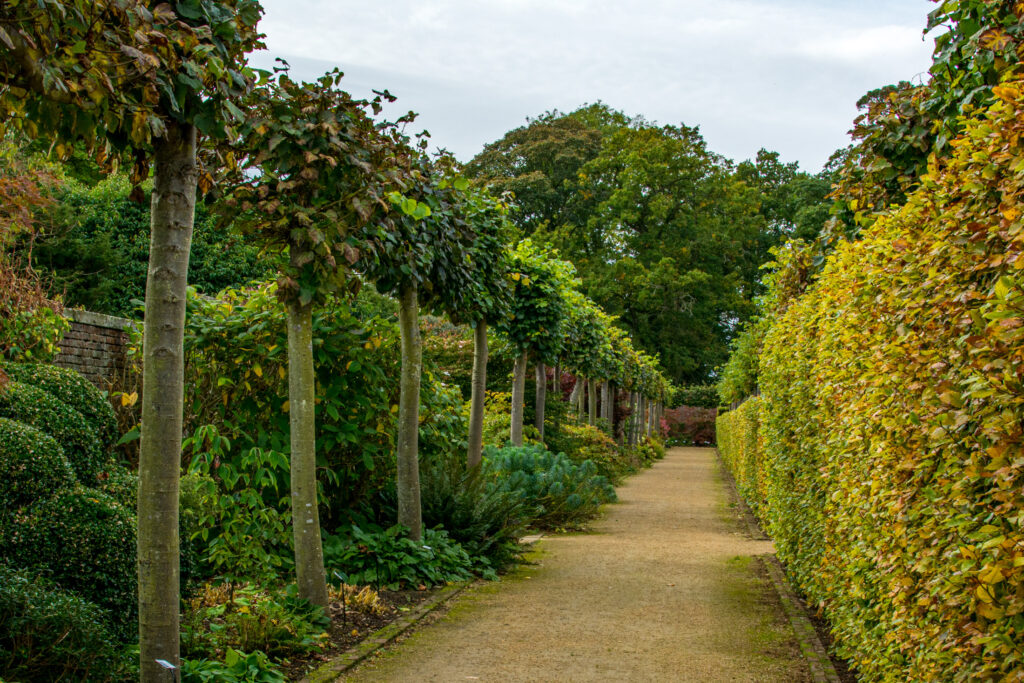
Elements such as trees, walls, pergolas, gazebos, arches, hedges, obelisks, sculpture, shrubs, etc., that operate on the vertical plane, offer up a gold mine of infinite structural possibilities, that when integrated effectively with the structural foundation of your garden layout can ensure that every season in a well structured garden is a season of interest. Take our main image as an example, this was taken in October at Scampston Hall in Yorkshire, and you can see that there's still plenty of interest going on to hold the eye even without any flowers to speak of, and you also know that even later in the year and well into winter the structural elements will still continue to work well.

Whether starting from scratch or adding extra layers of structure to an already existing garden when deciding which structural elements to include in your design simplicity is often the key. Consider the function, size and scale, materials, colour, style and positioning of each element; too many elements or materials, style and colour for instance, can result in visual overload whilst misjudging the size and scale of an element can lead to confusion and disproportion.

If you’re working with an existing garden most people tend to have a lawn, patio, pathway, borders and a shed or greenhouse. These are all structural elements – hopefully organised well already – so you wouldn’t want to overload it with too many more structural things but you might be amazed at the difference one or two small well placed specimen trees and some low level evergreen hedging could make!

Don’t forget the more seasonal elements of your garden in relation to the structure too. Your structure should support the whole, not take it over! It should offer a dependable backdrop to the high impact stars of the growing season. Those seasonal showstoppers will take centre stage when cued but when their star has faded it will be the good bones; the strong structural elements of a garden that will carry the mantle of interest through the whole year.