How to Create Flow and Cohesion in Your Garden Design

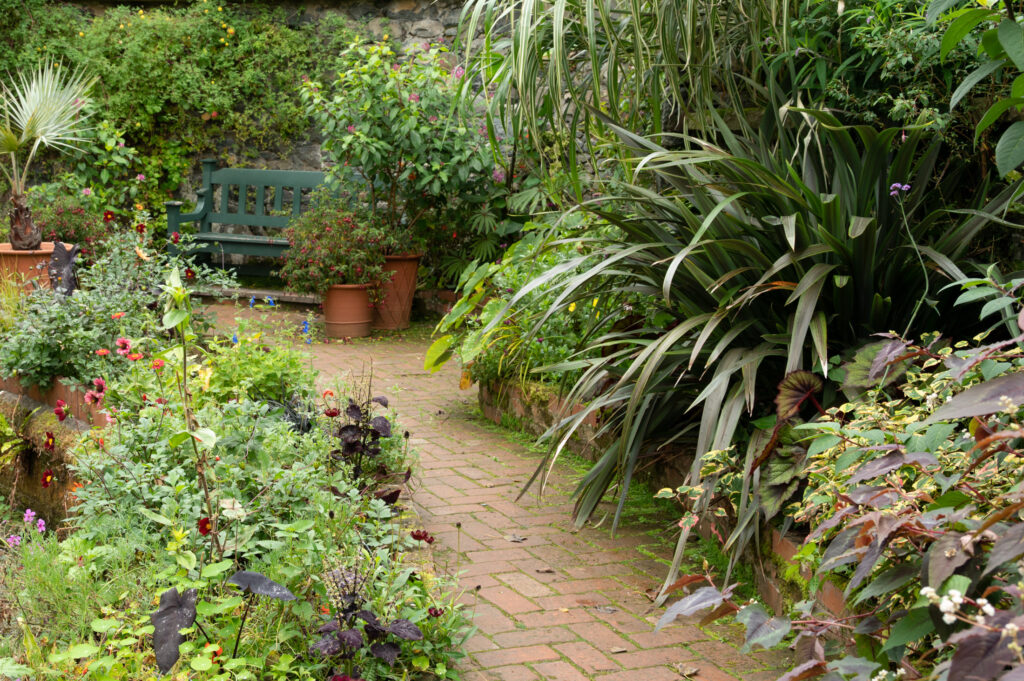
A garden with natural flow and cohesive planting design

Have you ever walked into a garden that just feels right - where everything seems to belong, and your eyes and feet are naturally drawn through the space? That sense of ease and connection doesn’t happen by accident. It’s the result of good garden design - specifically, flow and cohesion.

Whether your garden is small and urban or large and rural, creating a sense of harmony between its elements is what transforms it from a collection of parts into a beautiful, usable whole.

In this post, we thought we'd explore what flow and cohesion mean in garden design, why they matter, and how you can start improving both in your own garden.

What Do Flow and Cohesion Mean in Garden Design?

Flow is about movement and connection - how your eye, body, and attention move through the space. So paths, planting, sightlines, and focal points all influence how a garden flows. A garden with good flow tends to feel intuitive: you want to wander, explore, and linger in the space.

Cohesion, on the other hand, is about unity. It’s the visual glue that ties everything together, so think materials and colours; shapes and planting style. A cohesive garden feels balanced and intentional, even if it’s full of variety.

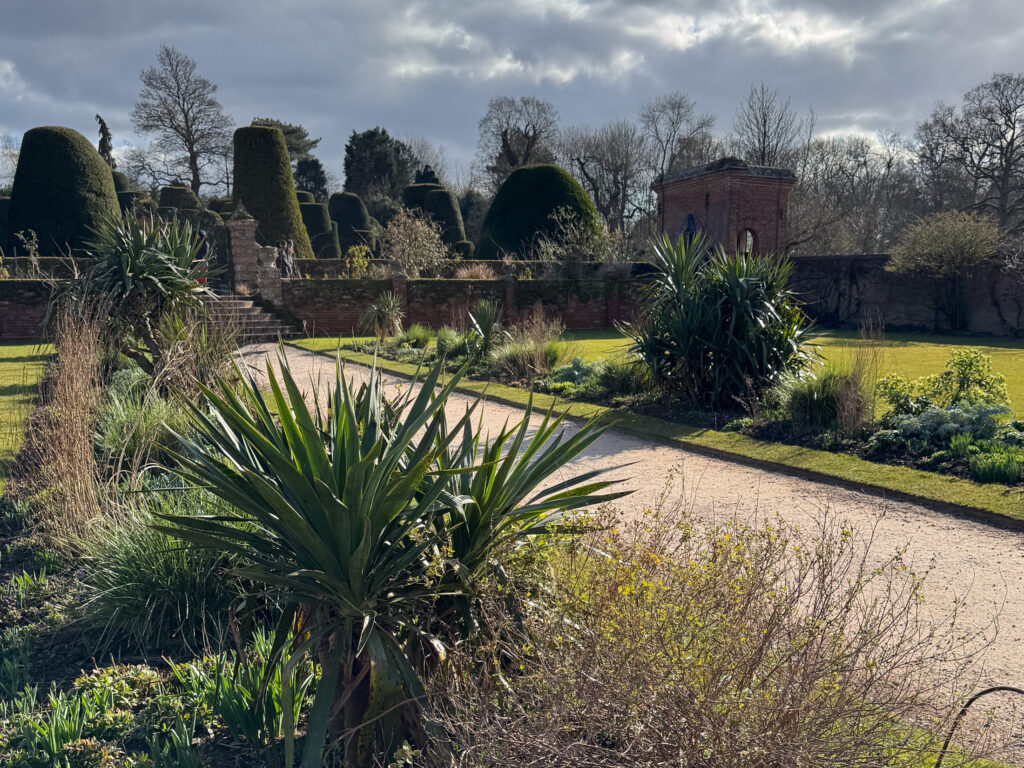
Together, flow and cohesion make a garden feel comfortable, natural, and right. Even in an 'off season' our main photo of the garden at Packwood House, National Trust illustrates this; our eyes 'travel' through the image easily - the pathway draws the eye towards the steps and then along the yew topiary towards the building and then down again to the pathway, whilst the structural planting maintains the garden's cohesion through repetition of colour, form and texture.

Why Flow and Cohesion Matter

Without flow, a garden can feel disjointed or confusing - you don’t quite know where to go or what to look at.
Without cohesion, it can feel cluttered or chaotic - lots of nice bits, but nothing that holds them together.

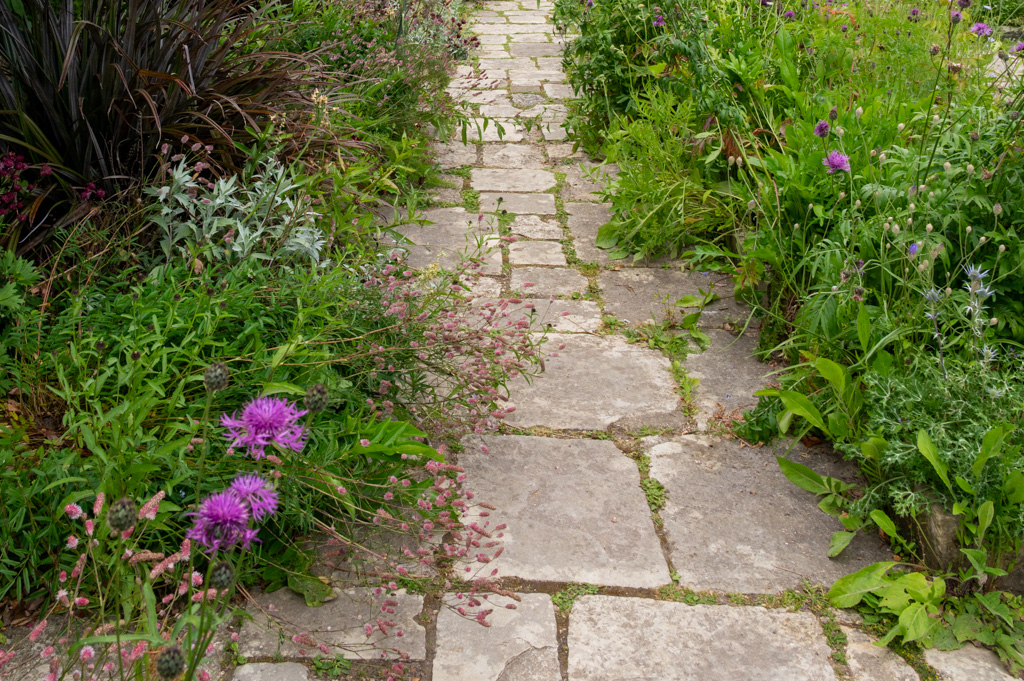
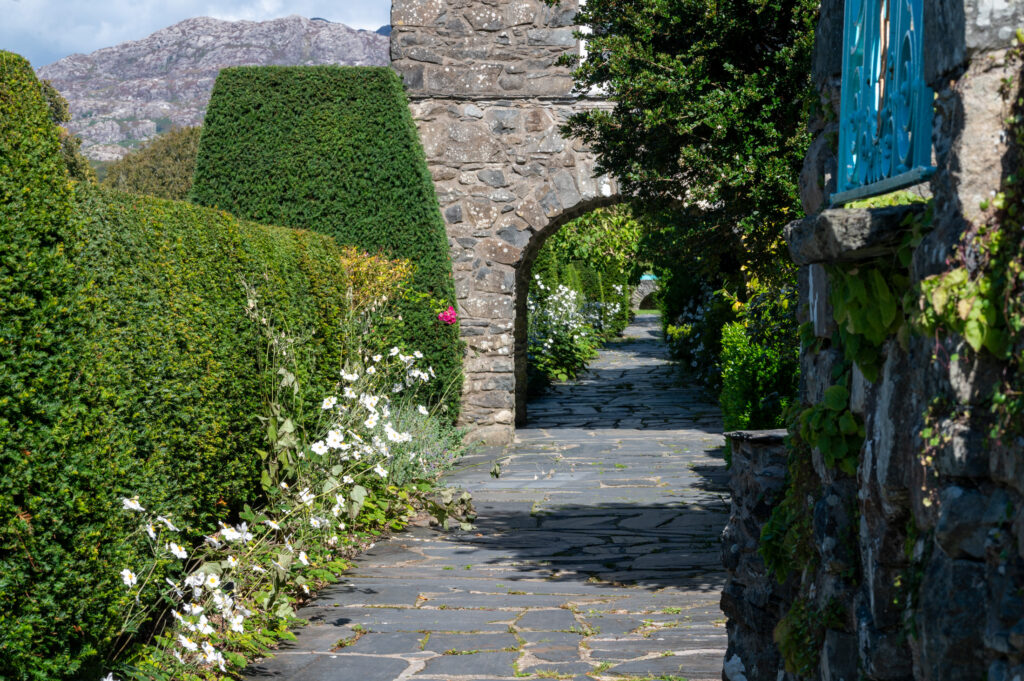
When you get both right, the whole garden starts to “speak the same language.” Every element - from paving to planting - supports the overall story or feel of the space. We loved this example at Plas Brondanw Gardens part of the Clough Williams-Ellis Foundation - see how the building and pathway materials pick up the Snowdonia mountains beyond? And how the repeated white anemones and topiary 'carry' the eye along the pathway?

Repeating materials and plant colours to create cohesion in a garden.

How to Improve Flow and Cohesion in Your Garden

If your garden doesn’t quite “hang together,” here are some easy ways to improve it:

1. Repeat key elements

Use the same materials, colours, or plant species in more than one area to visually link spaces together. Repetition helps create a rhythm that your eye recognises.

2. Create clear sightlines

Lead the eye towards something - a tree, sculpture, pot, or bench - to encourage natural movement through the space. In our example here of Bodnant Garden, see how your eye naturally follows the pathway towards the bench?
(Pro tip: Stand at your back door and look out — what’s your eye drawn to first?).

Garden path leading to a seating area creating visual flow.

3. Mind the transitions

Pay attention to how one area meets the next. Subtle changes in texture, height, or colour can help spaces flow into one another.
Avoid abrupt shifts - instead, use planting or materials to blend the edges. Check out our previous blog on Creating an Indoor Outdoor Cohesive Space too!

4. Keep your palette consistent

Limit the number of hard landscaping materials and dominant colours you use. Consistency creates calm and makes a space feel more unified.

5. Balance open and enclosed spaces

Flow relies on contrast - open lawns that lead into planted corners or sheltered seating areas create movement and interest without chaos.

The Takeaway

Flow and cohesion aren’t about strict rules - they’re about creating a feeling.
When your garden has both, it becomes a place you want to spend time in, because everything works together.

Next time you’re looking around your garden and something feels “off,” take a step back and ask yourself:

If the answer’s no, some thoughtful changes can help make a big difference!

🌼 Free Guide: 6 Simple Tricks to Improve Flow and Cohesion in Your Garden

Want practical, designer-approved ways to make your garden feel more connected?

👉 Download our free guide: “6 Simple Tricks to Improve Flow and Cohesion in Your Garden”
You’ll get three simple tips for improving flow and three for creating cohesion - easy to use, no matter what size or style your garden is.

Autumn Planting Guide for Warwickshire Gardens: Bulbs, Plants & Design Tips


Welcome to our autumn planting guide for Warwickshire gardens. One of the things we’re always trying to instil in our clients is that Autumn isn’t the end of the gardening year – it’s actually the start of the next one, and while the leaves may be falling and the evenings drawing in, September and October are usually some of the very best months to get plants in the ground.

Here in Warwickshire, our autumn gardens are blessed with warm(ish) soils, fairly reliable rainfall, and just enough growing season left for roots to settle in before winter. And that means that anything you plant now is more than likely to wake up strong and raring to go next spring.

In this guide, we’ll cover:

And at the end, don’t miss your free Autumn Planting Tips — a practical, step-by-step guide to help keep you on track this season.

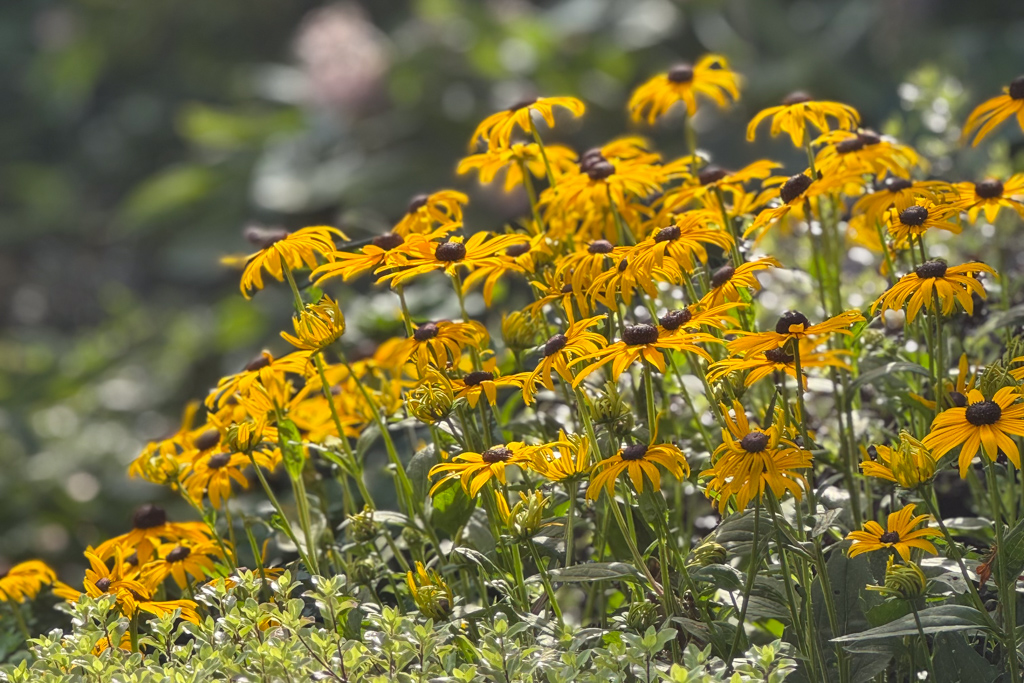
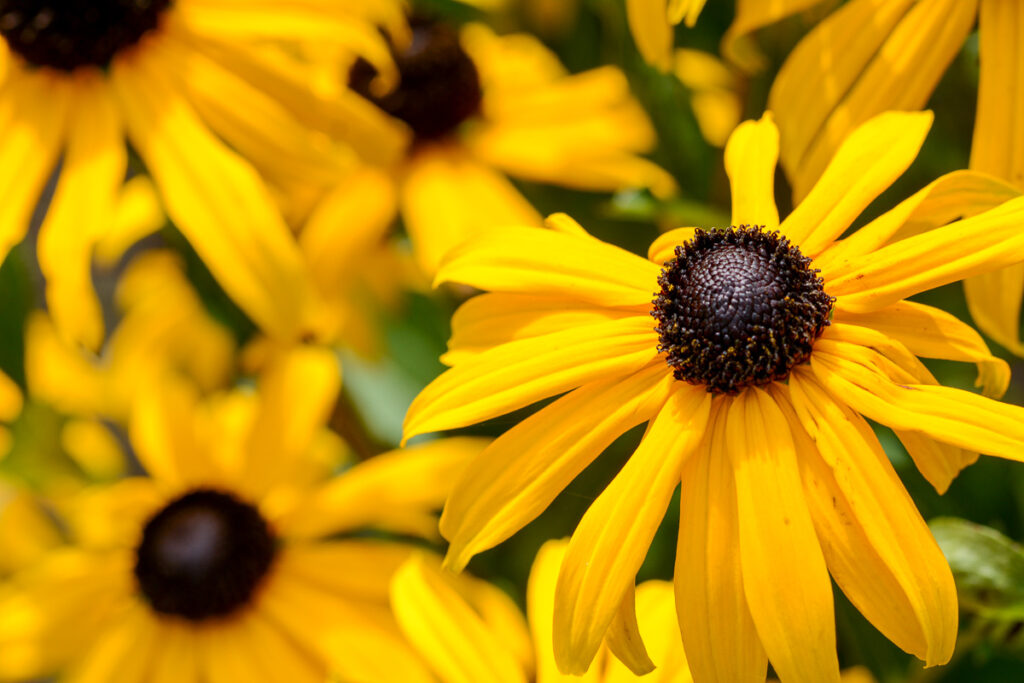
Rudbeckia bringing colour and drama to autumn planting in Warwickshire garden

Why Autumn is the Perfect Time to Plant

Many of our clients are used to thinking of spring as “gardening season” and it can feel odd to start planting when the days are getting shorter. But here’s the secret professional garden designers and horticulturalists know: autumn is actually better than spring for planting most things.

Here’s why:

In short: plant now, and by spring you’ll have stronger, healthier plants with less work. Win-win!

Best Plants to Plant in Autumn

So what should you be putting in the ground right now? Thinking about plant types, and in no particular order here are some ideas for you.

Spring Bulbs for Colour

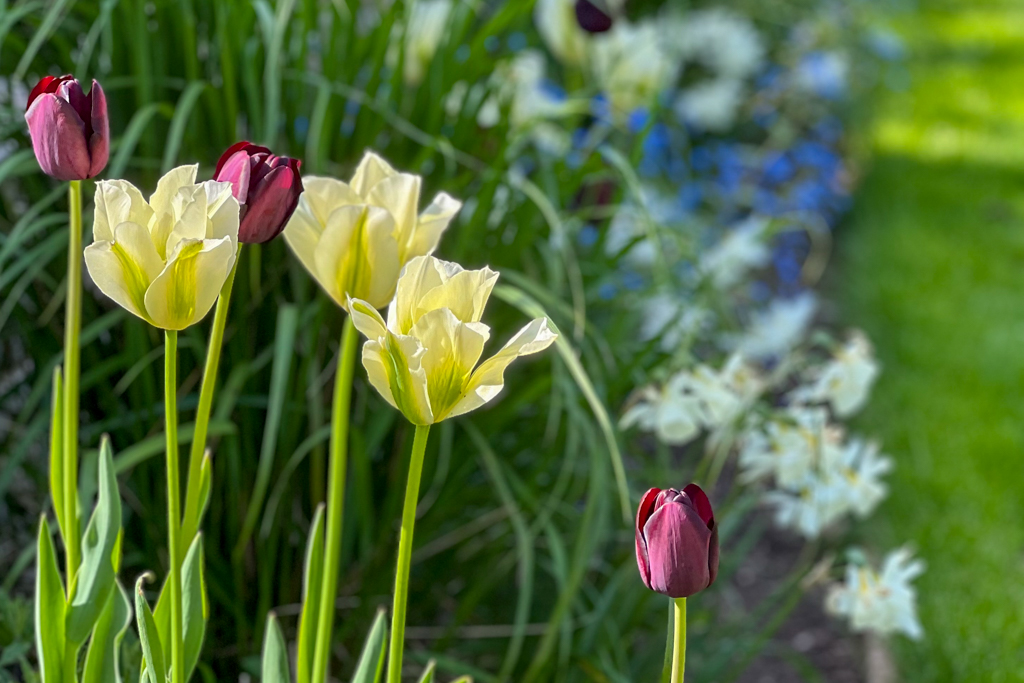
Spring bulbs planted in autumn for colourful Warwickshire garden border.
Tulips planted in autumn bring vibrant colour to Warwickshire gardens in spring.

Autumn is the time to plant bulbs if you want a dazzling display next spring, consider:

Design Tip: Plant bulbs in groups of 3, 5, 7, or more. Odd numbers and clusters look much more natural than straight lines.

Perennials & Grasses

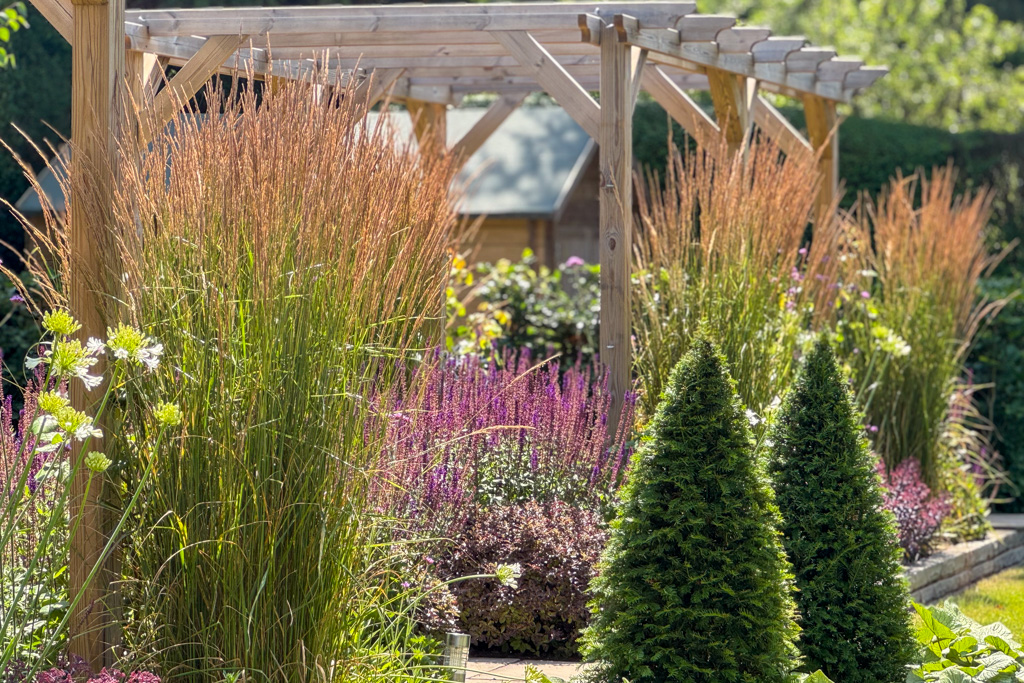
Ornamental grasses adding autumn height and structure to a Coventry garden design

Perennials planted now focus on growing strong root systems over the winter, so they’re usually tougher and fuller next year, think about:

Design Tip: Mix grasses with late perennials as we've done here for a Coventry client, for a soft, naturalistic look that lasts well into winter.

Trees & Shrubs

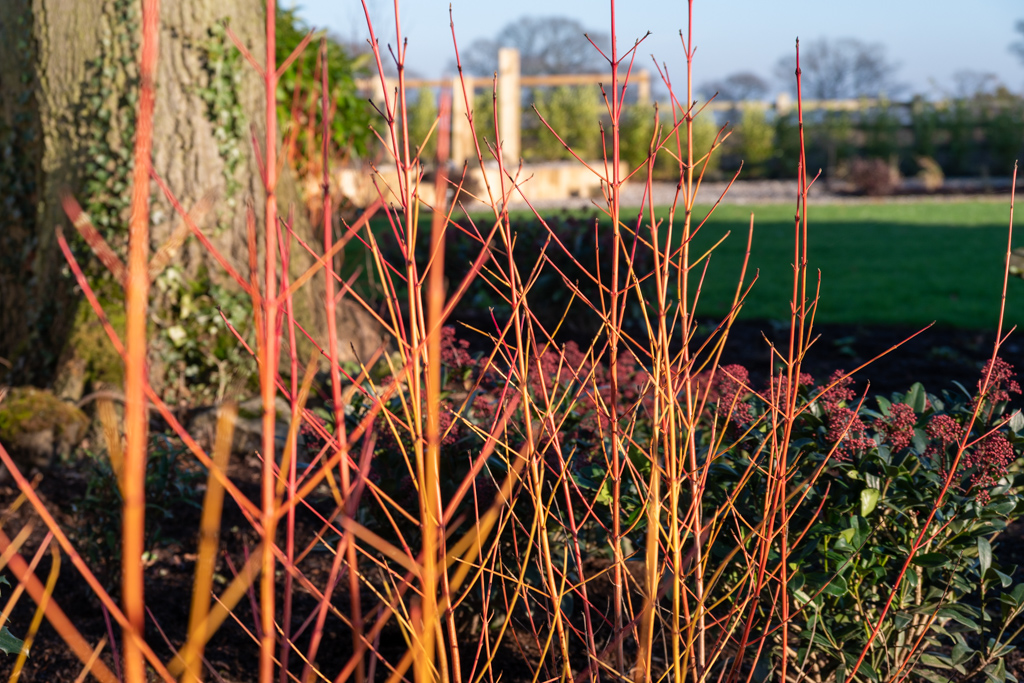
Cornus shrubs (Dogwood) adding winter colour to a Warwickshire garden design.

Autumn is hands-down the best time to plant trees and shrubs. Some of our favourites include:

Design Tip: Position trees and shrubs carefully — they’ll be the backbone of your design for years to come.

Plants for Wildlife

Butterfly enjoying Sedum in a Warwickshire autumn planting scheme.

It’s easy to forget that wildlife needs us most in autumn and winter too. Planting now helps your garden stay alive with activity.

Design Tip: Mix wildlife-friendly plants into your borders so they look great and support nature too.

Preparing Your Garden for Autumn Planting

A little prep tends to go a long way. Here’s how we suggest getting your beds and borders ready:

  1. Clear away summer annuals – this makes space for new plants and the old growth is a useful addition to composters.
  2. Improve the soil – dig in home-made compost or other suitable soil improvers, especially in Warwickshire’s clay-heavy areas.
  3. Mulch – laying a 5cm layer locks in moisture, feeds the soil, and insulates roots.
  4. Think layers when planting – shrubs for structure, perennials for colour, bulbs for seasonal pops.

Design Tip: Autumn is the time to set the stage. Treat each border like a theatre — the big players at the back, supporting acts in the middle, and the stars of the show at the front.

Garden Design Insight: Thinking Ahead to Spring & Summer

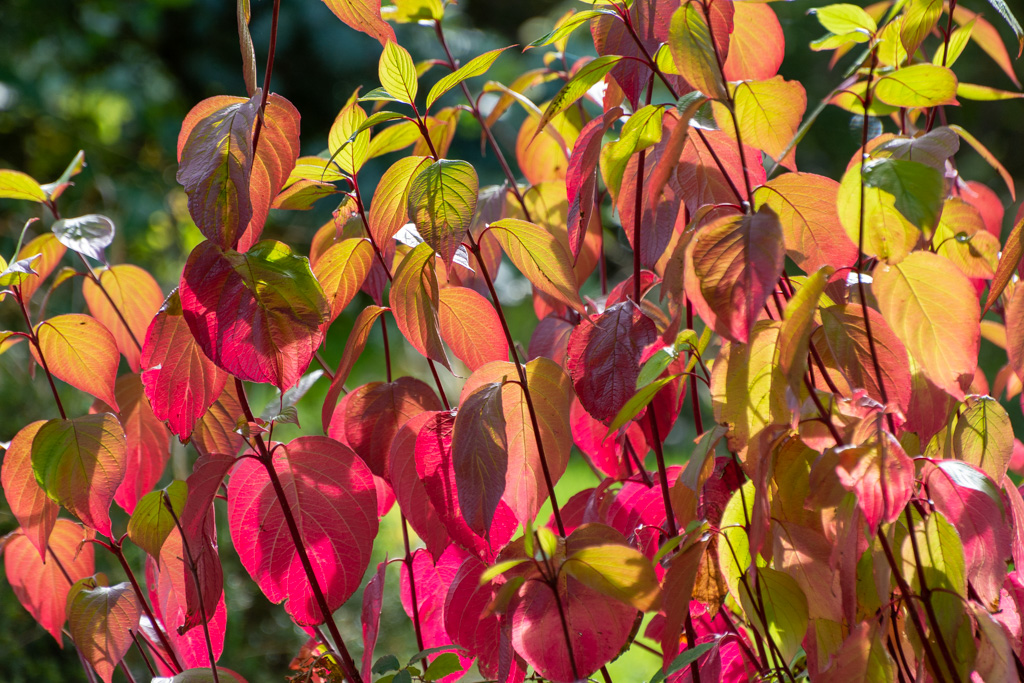
Cornus shrubs (Dogwood) bringing autumn leaf colour to a Warwickshire garden border.

This is where design really comes into play. Autumn planting isn’t just about filling gaps — it’s about planning the story your garden will tell next year.

When we design planting schemes at Blue Daisy, we look for:

It’s easy to get carried away at the garden centre, but a professional plan means you’ll spend wisely, plant smartly, and enjoy your garden more.

Free Resource: Autumn Planting Tips

To help you put this into action, we’ve created a free downloadable Autumn Planting Tips sheet. It covers:

Download your free Autumn Planting Tips here.

Ready to Refresh Your Garden This Autumn?

Autumn planting is the gardener’s secret weapon. By popping bulbs, perennials, and shrubs in the ground now, you’re setting yourself up for a spring and summer that will be bursting with colour, structure, and life.

If you’d like a helping hand:

Together, we’ll make sure your garden not only survives the winter but thrives next year and beyond.

Final Thoughts

The nights may well be drawing in, and the garden might feel like it’s slowing down, but in reality, autumn is where the magic begins. With the right plants, a bit of prep, and a touch of design, you can create a Warwickshire garden that feels alive through every season.

Let’s roll up our sleeves, plant some bulbs, and look forward to a spectacular spring!

How to Make a Small Garden Look Bigger: Expert Design Tips

Small Garden Design: Big Impact

It’s a common dilemma for homeowners: gardens are getting smaller, especially in new builds, and clients often ask how to make their small garden look and feel bigger. The good news is that limited space doesn’t mean limited potential. With thoughtful design techniques, a small garden can feel spacious, layered, and full of personality.

Here are six clever ways garden designers create the illusion of space.

1. Use Perspective to Make a Small Garden Look Larger

Small garden utilising perspective with diagonal and angled pathways and paving to help make the space feel longer.

One of the most effective tricks in small garden design is using perspective. Just as artists use vanishing points to create depth, garden designers guide the eye through space with narrowing paths, staggered planting, and changes in scale.

2. Divide Small Gardens into Zones

Small garden divided into zones with dining area, planting beds, utility space and relaxing sun spot for a spacious feel.

It may seem counterintuitive, but breaking up a compact garden into smaller “rooms” can make it feel bigger. Instead of revealing the entire space at once, divide the garden into zones such as a dining nook, seating area, or planting bed. We created 4 distinct zones in our client's garden shown here - an entertaining space, planting, relaxing and utility zone all encompassed in one, compact garden space.

Pergolas, trellises, or even a change in paving material can define these areas while keeping a cohesive feel. Screening part of the space with plants or hard materials adds curiosity and encourages exploration, helping the garden unfold gradually.

3. Go Vertical with Planting and Features

Vertical planting adding height and interest in a compact garden.

When ground space is limited, look upwards. Vertical design elements such as wall-mounted planters, trellises, green walls, or espaliered trees add layers of interest and draw the eye skyward.

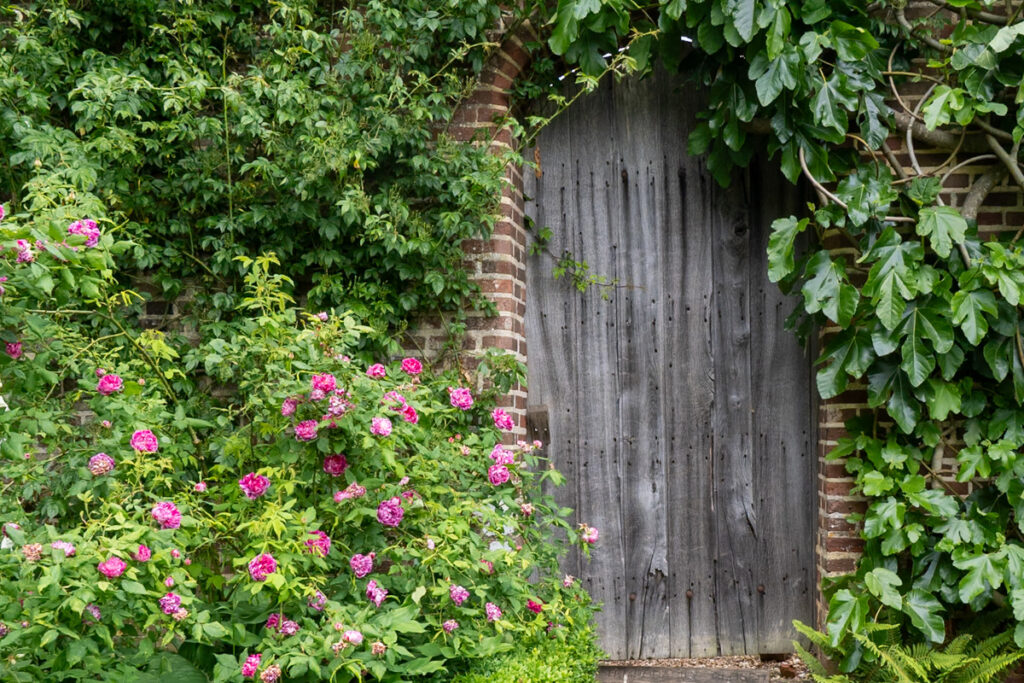
Climbing plants like clematis, jasmine, or climbing roses soften hard boundaries and add seasonal colour and fragrance without taking up precious ground space, illustrated beautifully in this little corner of Sissinghurst.

4. Use Lighting and Mirrors to Expand Small Spaces

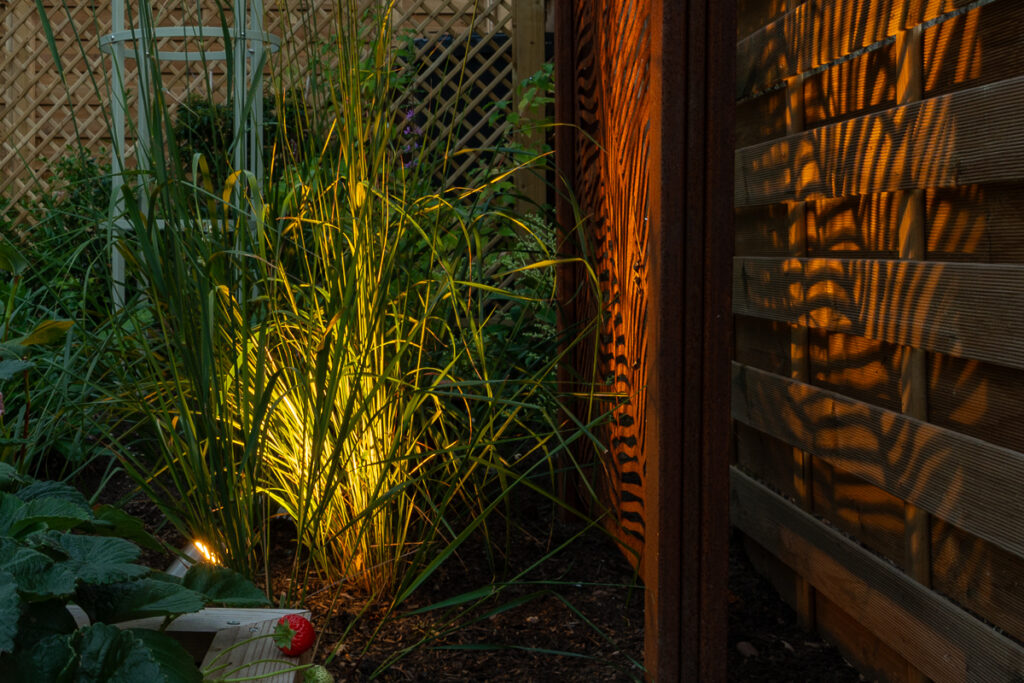
Small garden lighting with uplight creating depth and evening atmosphere

Lighting is a powerful way to enhance the sense of space. Uplighting a tree, backlighting planting, or adding subtle under-bench lighting creates depth and atmosphere, particularly in the evening. We chose to uplight a patterned screen in our Solihull clients' garden, shown here, to throw interesting shadows onto the boundary at night.

Mirrors are another clever tool. Positioned carefully, an outdoor mirror can reflect planting, light, or sky, making the garden feel twice as big. To keep it natural and safe for wildlife, angle mirrors slightly or partially conceal them with plants.

5. Choose a Cohesive Colour and Planting Palette

Small garden with cohesive colour palette of paving and planting for a spacious feel

In smaller gardens, too many materials or colours can make a space feel cluttered. Instead, stick to a harmonious palette of two or three hard landscaping materials and a restrained plant selection as we did here for a Tamworth client.

Repetition of shapes, colours, or textures creates rhythm and flow, helping the garden feel calmer and more spacious.

6. Add a Focal Point to Draw the Eye

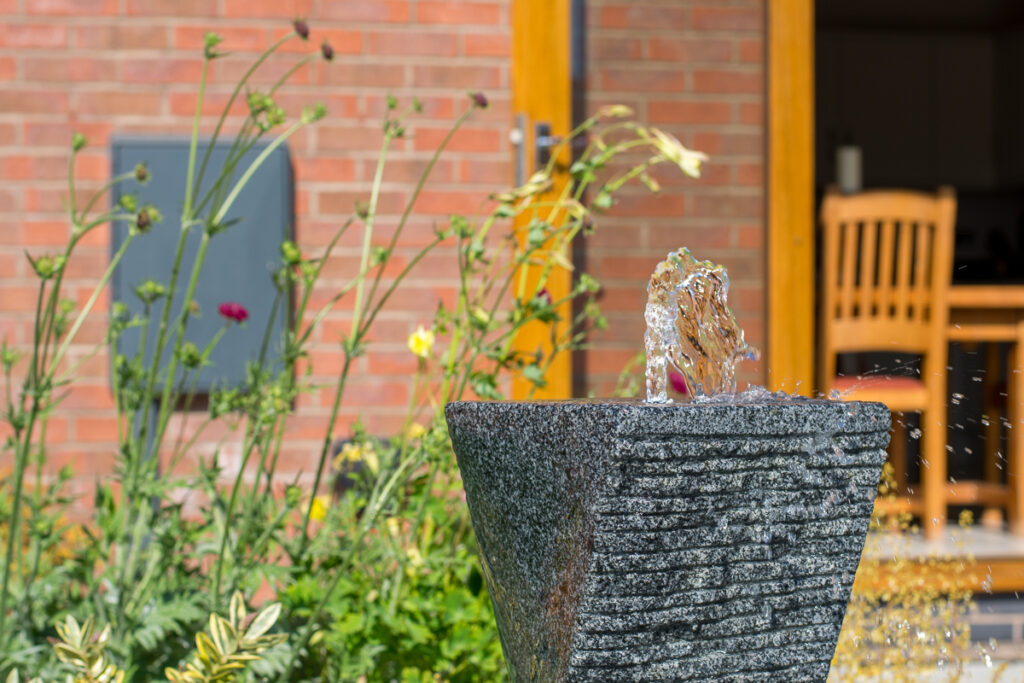
Focal point water feature invites exploration and movement through a small garden.

Every small garden benefits from a focal point. This could be a sculpture, water feature, specimen plant, or even a beautifully designed bench. A well-placed focal point anchors the design and gives the eye somewhere to rest.

Positioning a focal feature at the far end of the garden, or just out of immediate sight, encourages movement through the space and makes the garden feel deeper than it really is. We offset this beautiful water feature away from the patio doors in our Meridan client's wide but shallow garden. Our clients could hear the water but couldn't see it directly from many parts of their indoor space, drawing them outside to explore.

Conclusion: Small Garden Design That Feels Spacious

Designing a small garden is about creating illusions, managing perspective, and guiding the viewer’s journey. Through smart zoning, vertical planting, cohesive materials, and clever use of light and focal points, even the smallest garden can feel generous and inviting.

Thinking about redesigning your own small garden? Get in touch to find out how we can transform your outdoor space into a beautiful, functional retreat.

August Gardens

yellow rudbeckias typical august flowers

The top priority for your August garden is usually to just sit back, relax and enjoy your garden and who are we to say anything otherwise? Go on, get out there and enjoy it before the weather changes for good!

Traditionally, this is the holiday month so if you are managing to be away this year remember to arrange for a neighbour/friends/family to pop round to keep an eye on plants for you. You’ll need to ask them to pick the fruit and veg that has ripened on any edible plants or it will spoil what is left still growing.

Containers and hanging baskets will need watering so consider drip feed irrigation systems if family and friends can't step in for you while you're away.

Indoor plants do need to be watered this time of year so if you can’t leave your key with anyone sink the pots in the soil in a shady area where they won’t dry out so quickly.

August can also bring with it lots of thunderstorms and heavy downpours which is great for cleaning the leaves of trees, shrubs and hostas and bringing the lawn back to it’s lush green colour. Make sure that your water butts are at the ready and delicate plants are supported to prevent possible damage.

August Garden Jobs

There have been some major growth spurts going on in our gardens this year and one of the biggest problems for gardeners is to make sure things don't get too much out of hand. As ever deadheading is the order of the day for August along with watering. Don't forget to try to water late afternoon or evening if possible, avoiding the heat of the day (although roses do prefer a morning drink!). Some summer pruning is also on the cards to help keep things under control along with the usual August jobs:

July Gardens

orange heleniums typical July flowers in the garden

There are always some things in the garden that you'd do differently, and your July garden is often a good time to spot those difficult patches. Make a note of the changes that you'd like to make and take photos to help your memory so that when you do come to make changes later in the season it'll be an easier job.

Pests are usually rampant this month with aphids, particularly greenfly and blackfly multiplying fast. It's time to get the ladybirds into your garden for a sumptuous feast and if you haven't built a ladybird home yet it's a great thing to do with children. All you need is some lengths of hollow bamboo bundled together with either string or bunched inside a plant pot or something like a catering size coffee tin. Putting them inside something ensures the canes don't become a wind tunnel and if you've tied them up without putting them inside something do make sure one end of the canes are blocked up with something. Another way of providing insect homes is to drill some holes into one end of a log. Ladybirds and other insects will thank you for providing them with safe harbour to either lay eggs or to hibernate.

Managing pests and diseases is especially important in your fruit garden to help keep fruits healthy and with the hoped for sunshine also comes a plethora of weeds. Keep them under control in order to give your flowers, fruit and vegetable plants room to grow without too much competition.

July Garden Jobs

With summer well underway here is the job list for July, which includes…

Plants for late summer scent


For the most part our plants use scent to attract pollinators and other beneficial insects. Flowers that release scent during the day, for instance, are often pollinated by bees and butterflies, whereas those that release scent in the evening are seeking to attract bats and moths.

Humans too though, derive benefits from scent-wielding blooms. Lavender, jasmine and passionflower for instance, can all help relieve stress and induce inner calm. Scent can bring a sense of emotional wellbeing and mood enhancement too, often invoking positive memories for people – it was an important characteristic we utilised when we designed a dementia garden for a care home. By stimulating our sense of smell, scent brings another dimension to the enjoyment of a garden. In short, we connect with nature even more when we experience a more sensory environment, so including plants for scent in a scheme as well as for aesthetics makes sense.

With thousands of plants and varieties to choose from it’s possible to have scented flowers in your garden for 12 months of the year – and that’s not even including scented foliage! – but as a brief introduction here are some of our favourite scented plants for the next few months, to consider for your own garden:

For July

Philadelphus ‘Manteau d’Hermine’ – commonly known as mock orange, these shrubs are renowned for their orange-scented blossom. This is a compact variety, perfect for smaller gardens and easy to prune. P. ‘Belle Etoile’ is another more compact variety (slightly taller though not as wide as P. ‘Manteau d’Hermine’) but as long as you have a sunny spot there is usually a Philadelphus available to fill it!

Rosa Gertrude Jekyll – this is a beautiful, quintessential cottage garden staple with an old rose scent and striking pink rosette flowers.

For August

Jasminum officinale – a well-known and vigorous climber; this one can cover a wall quickly, but there are more compact varieties available, such as j. officinale Devon Cream; but all produce clusters of white flowers that emit a truly heady fragrance throughout the summer months.

Matthiola longipetala (Night Scented Stock) – a small but ‘sprawly’ old-fashioned lilac-to-white coloured annual that looks best sown in groups or in containers. It releases a strong scent at night time and is perfect for our night pollinators.

For September

Calycanthus ‘Venus’ – a deciduous shrub that repeat flowers from May through to September. It produces large, fragrant flowers that aren’t dissimilar to magnolia blooms.

Phlox paniculata ‘Rembrandt’ – great for areas of light shade, this 90cm tall perennial produces clusters of scented white flowers that seem to glow in the dark of dusk – and attract our evening pollinators at the same time – win-win!

This list is by no means exhaustive – or definitive – and many of these plants will flower across more months than the single one we’ve chosen them for here, but as a starting point to consider more fragrant flowers for your garden, you could certainly do worse!

June Gardens

blue geraniums typical June flowers in the garden

This is the time we usually get to relax and enjoy our gardens with the first vegetables ready to harvest, flowers in full bloom and long summer nights to appreciate our hard work! We have hurtled into June already enjoying lovely balmy evenings but this month the scent that June is reknowned for should really start taking over.

Make sure that plants in greenhouses, conservatories and windowsills get some good ventilation and shading protection too to make sure they’re not scorched.

It's still not too late to do the 'Chelsea chop' on parts of some of your late flowering perennials - doing this will help stagger and prolong their flowering period. Early flowering perennials like geraniums can also benefit from the Chelsea chop they'll reward you with a second flush of flowers later in the summer.

Try to keep up good garden hygiene by deadheading when you can. And slugs, snails, aphids, greenfly and blackfly, to name but a few, are really active at this time of year so keep your eyes open and deal with them at the first signs of activity which normally works in most cases.

Although it would be lovely to say you have nothing to do now, it’s not true; there are still lots of routine jobs that need doing to keep your garden looking vibrant.

June Garden Jobs

June is a prolific time in our gardens and while it's usually a great time to break out that well deserved drink to help us savour the warm, scented evenings there are also lots and lots of jobs to be getting on with this month.

Just in case you're not sure where to begin, here's a list to get you started:

May Gardens

Hints of summer should be on its way this month with warmer and longer days. With the very hot spring we've had everything seems to have exploded - not only the plants but also pests are out with a vengeance. Our May gardens are starting to inject more colour and vibrancy into our outdoor spaces with flowers coming into bloom thick and fast.

Tulips are already up and gracing us with their presence, remember though that there is still a chance of an occasional frost so be ready to cover tender plants. New shoots found on plants like hostas are tender too and will need protection from cold winds and late frosts – have newspapers or fleeces ready and hold them down with large stones over night if the forecast is for cold.

Lawns usually need to be mown twice a week in May and don't forget to cut on a high setting, especially if your grass is damp. Going too short too early will damage your lawn. Take care not to cut the grass where bulbs are flowering too if possible. As soon as the leaves begin to turn yellow and die back that is a sign for you to cut your grass over bulbs. Leaves are a very important source of energy for next year’s bulb displays!

Shelter your hanging baskets in a corner during the day inside or on top of a big pot and put them inside overnight until the threat of frost has gone. Spring flowering containers will usually be starting to fade towards the end of May but some might last into June this year. When they have gone over throw out those annuals and replace them with new plants you have sown yourself or bought elsewhere.

May Garden Jobs

Every month brings with it a list of jobs that need doing in the garden and May is no exception! This is a busy time of year generally. Your garden will benefit from TLC this month to give it the best chance of performing well for you during the summer months. Some May garden jobs for that list of yours…

The Problem with Narrow Borders

The term ‘less is more’ is used a lot, we say it ourselves for many reasons, however, when it comes to borders, more is most definitely more!

Narrow Border Constraints

We are often asked to develop a planting scheme or suggest plants for people that haven’t had their garden designed but have had their garden changed and built by landscapers who’ve ‘left the garden borders ready for planting’. Unfortunately, what we sometimes find are very narrow borders, often just placed around the perimeter of a garden.

Whilst this is by no means a criticism of landscapers, or clients, very narrow borders do make it difficult to create an impactful planting scheme. Sometimes narrow borders are simply due to either landscapers or home owners not realising or understanding the potential for borders to be used to as part of our garden design toolkit to change the whole look and feel of a garden; to bring ambience, for instance, or create surprise, to draw the eye or direct it, to create balance and proportion to the space. They don't appreciate that it is usually far better to have one or two large garden borders than lots of really tiny ones. Then again, it could be that homeowners want a low maintenance scheme and think that a narrow border means lower maintenance, when actually, a very narrow border can make it difficult to achieve lower maintenance status.

No Room for Growth

To illustrate this final point let’s consider an evergreen shrub such as a Choisya – a great, low maintenance shrub that flowers in spring – once you plant it, there is very little to do to it. Whilst there are a number of Choisya varieties available, for this example our shrub will naturally grow to around 1m width once the plant is established. Now imagine a 30-40cm deep border - which isn't unheard of - which means that if we did use it, our poor Choisya would have roughly a third pushed up against a fence and another third hanging over the border edge often getting in the way of a lawn mower resulting in the plant never really looking that attractive and homeowners never being that happy with it. As such, so many garden staples that are lower maintenance just can't be used in narrow borders and if they are, would outgrow the available space in no time at all. Had the borders been wider a lower maintenance scheme can be more effectively achieved.

Sentries in a Row

Picking up on some of our earlier design points too, narrow borders make it impossible to, quite literally, create any sense of depth in a border which, if available, brings with it opportunities to utilise other design principles such as using various textures, sizes and shapes of plants to create drama and visual impact. Instead, in a very narrow border a row of similar shaped plants - or indeed the same plant - might need to be used in the space in order to make the best of the available space and create some sort of cohesion, but the down side of that strategy is that it can often end up looking a bit like peas in a pod or sentries in a row. Even a very contemporary garden – which often uses a more limited planting palette – would still benefit from deeper borders.

Expand the Border

When faced with narrow borders we do usually try to convince a homeowner to 'expand' at least one border if it is at all possible to allow for a richer tapestry of shapes, form and colour in the garden, as well as to bring more balance to the overall feel of the space. And when we design a garden, we will always design it with a more balanced proportion of planted to non-planted areas, utilising deeper borders and the positioning of them to allow us to create a planting scheme that delights the client and wildlife/pollinators too.

So, if you are designing the layout of your own garden do try to consider the size and positions of your borders a little more because where they are concerned, more is most definitely more!

April Gardens

April usually brings with it an injection of colour in our gardens, the spring bulbs are usually out in force, other plant leaves are unfurling and trees are often awash with blossom at this time of year making it feel as though life is most definitely stirring! The birds are usually singing, insects are usually starting to show themselves and often the bees are out making the most of the early nectar from the spring flowers.

Keep your eyes open for any pests like slugs and snails and the dreaded vine weevil.

Chances are you've been reticent about getting tender plants or seedlings outside but if you have ventured out take care still as frosts can still damage them so have some horticultural fleece or even an old newspaper at the ready to cover them during those colder nights. If you don't have either and can bring them indoors remember to take them back out the next day.

Spring is a great time for scent in the garden and if you don't have anything now is the perfect time to go out and buy yourself something that will add another dimension to your garden at this time of the year. Some to consider are, for example, Viburnum, Philadelphus, Wisteria and Magnolias but be sure to double check before you buy because not every variety of these plants has a scent.

If you have a vegetable garden you'll be a busy bee making sure the ground is prepared and heated sufficiently enough to plant those tender seedlings that will hopefully produce an abundance of tasty treats for you later in the year! Remember though the trick is to sow seeds every few weeks or so to make sure you get an ongoing supply of produce that you can cope with rather than being inundated with things like courgettes…yes, we've all done it with courgettes!!

April Garden Jobs

Some of the jobs that can be done in your garden this month are: