
January is often a quieter month in the garden, but it’s a time when many homeowners start thinking ahead. The structure of the space is easier to see without foliage, and decisions around materials tend to feel more grounded when the garden isn’t competing for attention.
When we’re working with homeowners across the UK, sustainability often comes up early in these winter conversations. Not as a strict rulebook, but as a desire to make thoughtful choices; materials that will last, sit comfortably within the landscape and feel right over time.
What counts as “sustainable” can vary from garden to garden. Soil type, exposure, budget, existing hard landscaping and even how much maintenance you’d like to take on all shape what’s realistic. January can be a helpful moment to reflect on these factors before any spring work begins.
Start with What Your Garden Already Offers
In many UK gardens – including those we see around Warwickshire – there’s often something worth keeping. Reusing or creatively re-purposing existing materials is nearly always the most sustainable move.
We’ve found that:
- Old bricks, even weathered ones, can be turned into edging or informal paths.
- Reclaimed slabs can form characterful stepping zones.
- Mature timber elements may look tired but can often be refinished, not replaced.
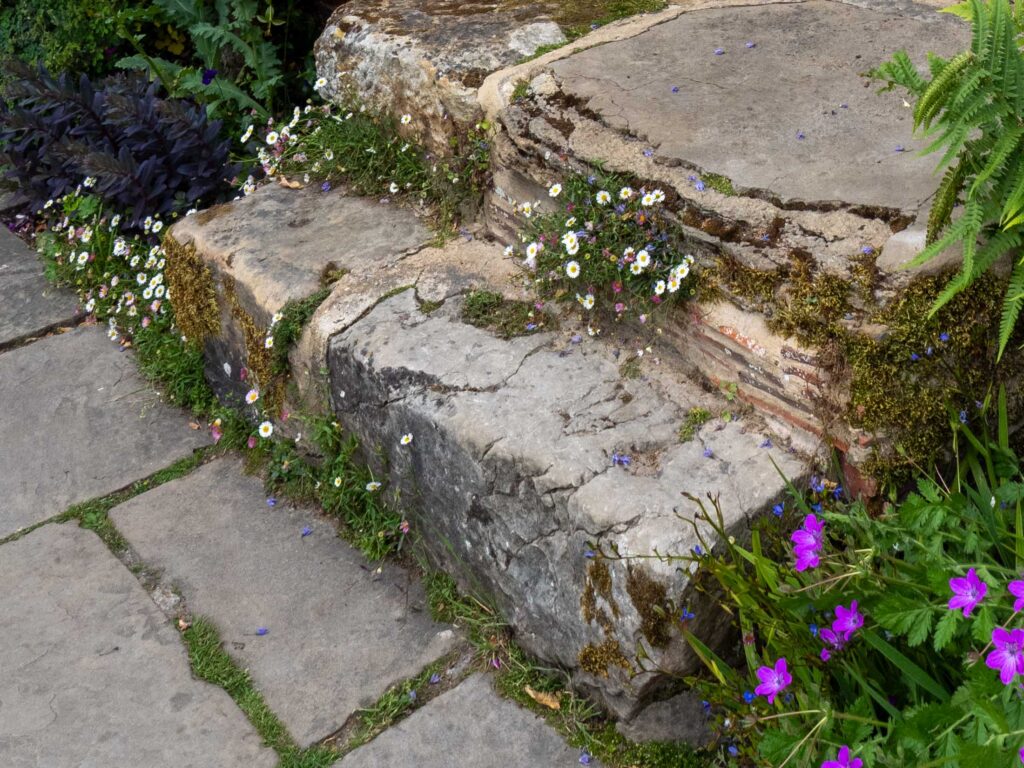
Considering what can stay reduces waste, saves money and helps the garden retain a sense of continuity. Sustainability can start before anything new is purchased. Reclaimed materials often carry a quiet advantage because they’ve already proven themselves. Stone steps like those in our main image, reused and allowed to weather naturally, tend to sit more comfortably in the landscape than newly introduced alternatives. In winter, when the garden’s structure is more visible, these details can help confirm which materials still feel right — and which are worth keeping as part of a more sustainable approach.
Understanding the Eco Impact of Common Garden Materials
Different materials carry different footprints. Rather than ranking them, it can help to think about the type of impact involved: carbon cost, transport miles, extraction method and longevity, all play a part for instance.
Timber
Timber often feels like a natural choice, but not all timber is equal.
- FSC-certified softwoods are usually more affordable but won’t last as long.
- Hardwoods such as sweet chestnut or oak have greater longevity and often suit traditional Kenilworth and Warwickshire settings.
- Composite products vary widely; and while some products do perform well, others don’t weather convincingly.
We tend to look at how much exposure the timber will receive and how our client feels about ongoing care. The most sustainable timber is the one that is more likely to perform best for many years in your specific conditions.
Stone
UK-sourced stone is often more sustainable than imported alternatives due to lower transport emissions. Sandstone and limestone from British quarries can sit very naturally in local gardens, especially those influenced by Warwickshire’s softer rural character. Costs can be higher than imported stone though, but longevity and a lower carbon footprint can often offset this over time.
Because cost is often a factor when choosing stone and paving when we do work with suppliers who import we choose those that care about the provenance of their products.
Gravel and Aggregates
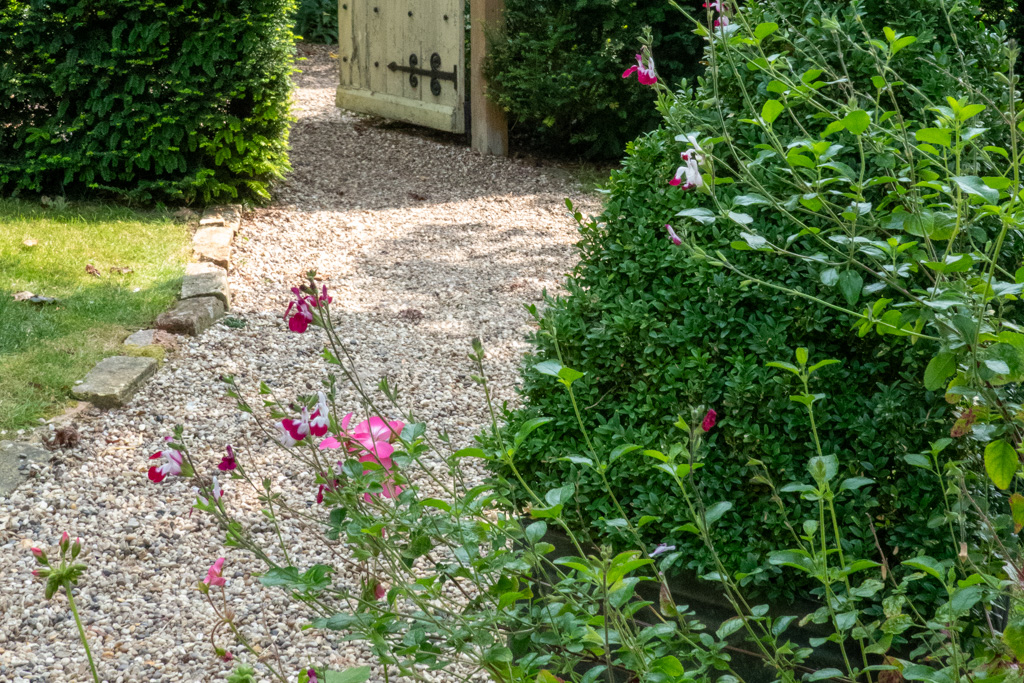
Locally sourced aggregates can offer a flexible, cost-conscious option. They also help with drainage, which is increasingly valuable in changing UK weather patterns.
It can help to consider:
- How the gravel colour works with your planting palette
- Whether you’re happy with the movement and occasional topping-up requirements
- How any edging will keep the shape tidy over time
Metal
Recycled steel and corten can work beautifully in modern and traditional spaces. Many homeowners tell us they appreciate how corten’s weathering process brings character that actually improves with age.
Matching Sustainability with Garden Style
Sustainability doesn’t have to dictate a particular look. We often find that understanding your preferred aesthetic makes the material choices easier.
Contemporary Gardens
Simple lines and calm surfaces work well with:
- Composite decking made from recycled materials
- Corten steel features
- UK-sourced stone laid in larger-format slabs
The key is consistency. Sustainable materials tend to shine when they’re used thoughtfully rather than sparingly.
Cottage and Traditional Gardens
We see many homeowners drawn to reclaimed brick, gravel paths and British stone in this style. Each tends to blend comfortably into older properties around Kenilworth and Coventry’s outskirts.
Reclaimed materials offer both sustainability and an instant sense of belonging.
Wildlife-Friendly and Low-Intervention Gardens
Natural materials such as untreated softwood, bark mulch paths or local aggregate surfaces feel at home in these spaces. They invite movement, allow for ecological change and age gently.
Considering Cost Without Losing Sight of Value
Cost plays a part in every project, but sustainability and affordability can sit together more comfortably than many expect.
A few guiding thoughts we often discuss with clients:
- Longevity matters. A material that lasts twice as long is usually more sustainable, even if it costs a little more upfront.
- Low-maintenance is not always low impact. Some cheaper finishes need regular replacement or chemical treatment.
- Transport distances influence cost as well as eco impact. UK-sourced materials often offer better long-term value because delivery is simpler.
Balancing cost and sustainability usually becomes clearer once you’ve narrowed down style and functional requirements.
How Materials Weather Over Time
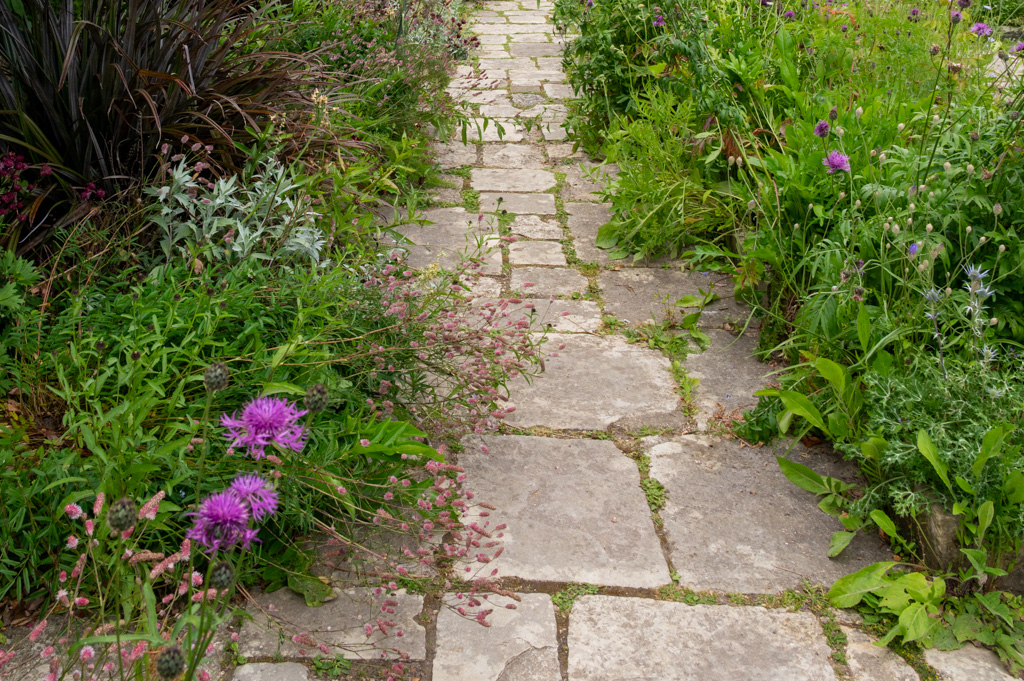
Sustainability also relates to how a material behaves once it’s exposed to the UK’s mix of rain, frost, sun and wind: this is something many people notice most clearly in winter, when surfaces are fully exposed to the elements and there’s less planting to soften them. Natural stone paths, for example, often reveal their true character at this time of year — uneven edges, gentle colour variation, and joints where planting has gradually found its way in. In our experience, these moments tend to reassure clients that a material has been well chosen; it feels settled rather than imposed, and improves with age rather than demanding constant correction.
Next time you're in your winter garden notice how:
- Pale stones often darken in shady corners of gardens.
- Timber silvers naturally; some people love this, while others prefer a consistent finish.
- Metal features develop patina, which can soften a garden beautifully if placed with intention.
It can help to imagine what your garden will look like in five or ten years rather than at installation.
Practical Questions That Often Clarify the Decision
Here are a few reflective prompts that many people find helpful:
- Where will the material sit: sun, shade, wind exposure, damp corners?
- What’s already working in your garden that you might build on?
- How much visual contrast feels comfortable in your space?
- What level of maintenance feels realistic for you long term?
- Does the material feel like it belongs in your home’s wider landscape?
Sustainability becomes simpler when the material supports the way you already live in the garden. For more thoughts on choosing surfaces in the garden check out our previous post.
Final Thoughts
Choosing sustainable materials isn’t about perfection; it’s about making choices that feel grounded, durable and sympathetic to your garden’s character. We’ve found that once clients align style, practicality and their environmental values, the finished space tends to sit more comfortably with them for years to come.
If you’re planning changes, we can explore what feels right for your space.


