
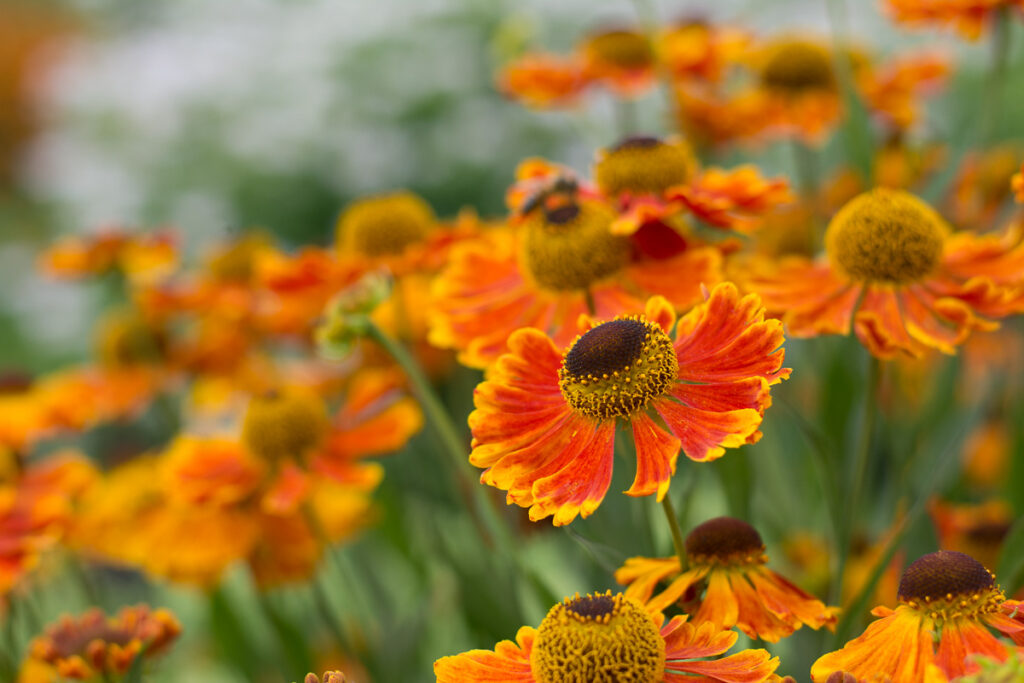
July is often one of the fullest months in the garden. Borders are usually bursting, many perennials are at their peak and, after months of watching everything gradually come together, it's often the time when it’s finally possible to enjoy the results of all the work that began back in spring.
This year, though, many gardens are approaching July looking rather different to usual.
Following an exceptionally warm, dry spring and England's warmest June on record, many of us have already spent more time watering than we'd normally expect by this stage of the year. Containers have needed regular attention, some lawns have started to lose their colour and newly planted areas may already be showing signs of stress. At the same time, other plants will have quietly carried on regardless. And let’s not forget the soil too; it is being tested equally as hard as our plants.
Rather than seeing this as just another dry spell to get through though, it's worth considering what – if anything – your garden might be trying to tell you!
Updated for July 2026
What is your garden teaching you?
Seasonal changes always tend to reveal something about a garden, but periods of unusual weather often expose things more than a typical year ever could. For instance, some plants might appear to be really struggling with the warm, dry conditions while others seem to be coping well, and in some cases, it might not be what you were expecting at all. Different parts of the garden might be drying out much more quickly than others, too.
These are all useful things to know because if the hot weather is expected to become the norm, as some experts suggest, then that knowledge helps to identify where planting might be well suited to its position, or where conditions are more likely to prove challenging, and even where potential changes could perhaps make the garden more resilient in future years.
But for now…
If the dry weather continues…
If July remains warm and dry, it makes sense to focus your efforts where they're likely to have the greatest impact. Newly planted trees, shrubs and perennials for instance, are likely to need more attention than more established planting, while containers will usually continue to dry out much more quickly than garden borders.
If you're relying heavily on mains water already, this may also be the moment to start thinking beyond this summer. Would additional water storage make life easier next year? Could a water butt be added to another downpipe? Are there areas of the garden that consistently need far more watering than others?
They're not all questions that need answering immediately, but they are questions well worth considering while we’re actually living through the experience.
If the weather changes…
If July turns wet though which, let’s face it, wouldn’t be a complete surprise for July in the UK, trying to make the most of the rainfall and managing excess might well become the dominant drivers of your garden work.
With the ground being so hard there’s a good chance that rainfall might not permeate the top level of soil so if you know it’s due, it might be worth trying to break the crust of packed border soil to help the water get to roots.
Heat-stressed plant roots can struggle if dry ground suddenly floods though, so helping the water filter through the soil can be just as useful as helping it get beyond the surface level. Try getting a garden fork fairly deeply into the soil to create drainage holes, especially around any plants where the water pools.
After rain it’s always worth digging a few inches down into the soil to check how far the water reached. It can be tempting to think that some rain will have done the watering for you but the ground can remain surprisingly dry after rainfall, and if that is the case then your watering regime may need to continue.
Looking ahead
Whether July turns out wet or dry, 2026 is already proving to be an interesting gardening year! If you haven’t done it already, it’s worth taking a few photographs and/or making a note of anything out of the ordinary that might be happening in your garden. For instance, anything that surprises you, or delights you, or worries you, or sends you into despair (which unfortunately can happen too). The lessons of this month and year can help us prepare for the next.
July Garden Jobs
While every July is different, most gardens will benefit from regular attention rather than major intervention. The following jobs will help keep your garden looking its best through the height of summer.
Prioritise your watering
- If July continues the recent dry weather, concentrate your efforts where they'll make the biggest difference.
- Water newly planted trees, shrubs and perennials during prolonged dry spells.
- Check containers and hanging baskets regularly, as they can dry out surprisingly quickly.
- Water thoroughly rather than little and often.
- If you've found yourself using the hosepipe far more than usual this year, consider whether additional rainwater storage would be worthwhile before next summer.
- Keep an eye on local advice should hosepipe restrictions become a possibility later in the season
- Top up organic mulches where they've broken down to help conserve soil moisture
Keep an eye on your planting
- July is one of the easiest months to see how well your planting is performing.
- Deadhead repeat-flowering perennials and roses.
- Support taller plants before they begin to lean or collapse.
- Tie in climbing plants as they continue to grow.
- Remove any tired foliage where appropriate.
- Make a note of plants that have coped particularly well with this year's conditions, and those that haven't.
Learn from your garden
- Photograph borders while they're looking their fullest.
- Make a note of any gaps that appear once early-flowering plants finish.
- Record combinations that have worked particularly well.
- If certain plants have struggled repeatedly during the dry weather, consider whether they're suited to that position or whether a different choice might perform more reliably.
Harvest and enjoy
- Harvest fruit and vegetables regularly.
- Pick flowers for the house when you can - bring the garden indoors!
- Continue harvesting herbs.
- Spend some time just enjoying the garden and noticing how it changes through the month.
Greenhouse
- Ventilate well during warm weather.
- Provide shading where necessary.
- Water greenhouse plants consistently.
- Check regularly for pests.
Wildlife
- Keep bird baths topped up with fresh water.
- Check ponds during prolonged dry spells.
- Leave areas of the garden undisturbed where wildlife is sheltering from the heat.
- Continue encouraging beneficial insects by providing habitats and a variety of flowering plants.
Around the garden
- Hoe borders regularly to keep weeds under control.
- Raise mowing heights if the lawn is becoming dry.
- Trim hedges once you're satisfied there are no active bird nests.
- Check tree ties and stakes on recently planted trees.
One final thought…
While no two years are ever the same, warmer temperatures and more frequent weather extremes mean that seasons like this may become less unusual in the future. Which means, of course, that any lessons we can learn from our own gardens this year could turn out to be really valuable in the years ahead.


